How to Fight Off an Attacker: 4 Unarmed CQC Responses for When There’s No Weapon to Grab
July 30, 2026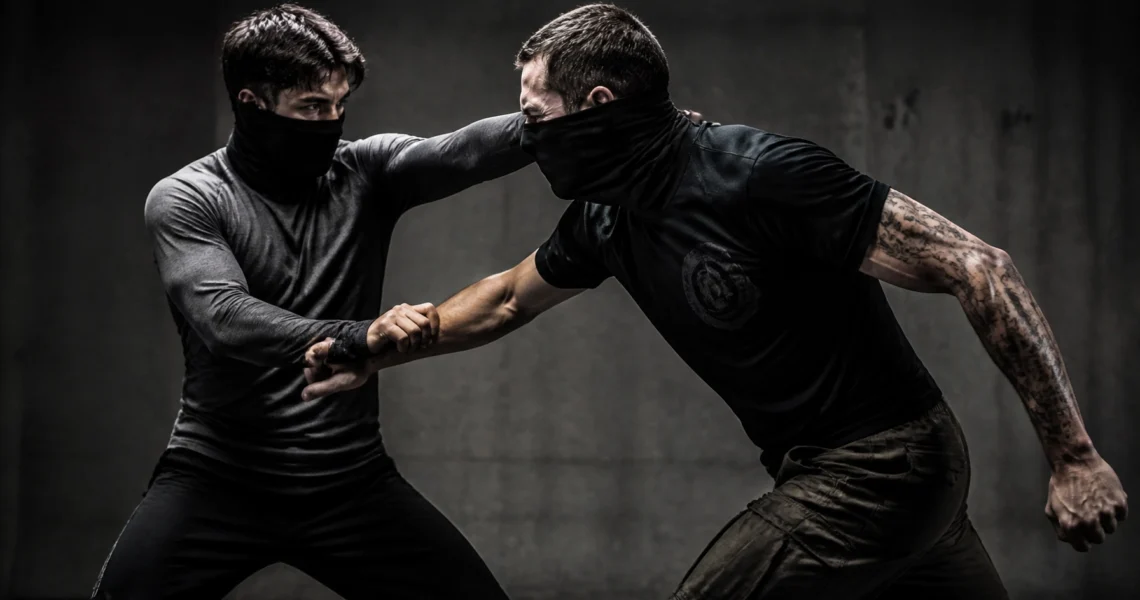
When it comes to tactical self defense miami, preparation is everything.
When an aggressive attacker rapidly closes the distance on you, you rarely have the luxury of drawing a defensive tool or picking up an improvised weapon. In high-stress, real-world violent encounters, knowing proven unarmed CQC responses can mean the absolute difference between walking away safely or suffering catastrophic injury. Most martial arts tutorials online feed viewers choreographed fantasy scenarios where opponents wait politely for complex combinations. Real street encounters are chaotic, explosive, and ugly. Having a clear set of tactical unarmed CQC responses allows you to act instinctively when panic sets in and distance collapses.
Whether you are caught off guard in a parking garage or cornered in an alley, close-quarters combat (CQC) requires gross motor movements, decisive aggression, and simple mechanics. In this ultimate guide, we cut through the noise to deliver four combat-tested techniques designed for extreme survival situations.
Why Traditional Martial Arts Fail vs. Effective Unarmed CQC Responses
In a controlled gym environment, combat sports like Brazilian Jiu-Jitsu, Boxing, or Muay Thai operate within structured rules, referee supervision, and weight classes. However, street assaults lack rules. Attackers often utilize ambush tactics, multiple aggressors, or hidden blades. Relying solely on complex submission holds or high kicks when caught off guard often leads to failure, making direct, violent unarmed CQC responses necessary for self-preservation.
Tactical self-defense relies on principles derived from military and law enforcement combatives. Learn more about the evolution of tactical tactical principles on Wikipedia’s Close-Quarters Combat breakdown. The goal of military-grade close combat is not to win a points match; it is to neutralize the threat, create an immediate escape window, and return home alive.

4 Unarmed CQC Responses for Street Survival
When violence is inevitable and you have no weapon to grab, your physical frame must become both shield and spear. Here are four foundational tactical responses designed to overwhelm an aggressor and end the violent encounter immediately.
1. The Frame and Spear (Defensive Guard Under Sudden Violence)
When an attacker surges forward with violent punches or a sudden tackle, your primary goal is head protection and structural stability. The frame-and-spear technique is one of the most reliable initial unarmed CQC responses when caught off guard.
- How to Execute: Drive both forearms forward into a tight triangular frame (similar to a double-arm shield) protecting your temple, neck, and jaw line. Tuck your chin into your chest and step forward into the attacker’s momentum rather than leaning backward.
- Tactical Objective: Absorb power using the heavy skeletal frame of your forearms while driving your elbow point directly toward the attacker’s throat or chest.
- Follow-Up: Once the initial blow is jammed, instantly transition to retaliatory strikes.
2. Violent Counter-Striking (Palm Heels and Hammer Fists)
Closed-fist punching on a hard human skull frequently results in broken hand bones (the boxer’s fracture). In survival scenarios, high-impact unarmed CQC responses emphasize open-palm heel strikes, elbow strikes, and hammer fists that do not break your hands.
By unleashing aggressive palm strikes to the chin, nose, or soft tissue of the throat, you transfer kinetic energy through the attacker’s neck column. Combine this with direct hammer fists to the side of the neck or collarbone to break down their offensive posture rapidly.
3. The Clinch Control and Knee Overload
Violence inside arm’s reach quickly devolves into grappling. If an attacker grabs your clothing, arms, or torso, these close-range unarmed CQC responses allow you to regain control over their balance while inflicting severe structural damage.
Establish a heavy collar-tie or double-head clinch by pulling down on the back of the attacker’s neck while lowering your own center of gravity. Deliver devastating, high-velocity knee strikes directly into their midsection, groin, or thighs. Disrupting their breathing and abdominal wall compromises their ability to attack or pursue you.
4. Sprawl, Frame, and Disengage (Takedown Defense)
Going to the pavement during a real-world violent fight is extremely dangerous due to hard surfaces, hidden weapons, or secondary attackers. Executing proper unarmed CQC responses against a tackle ensures you stay upright on your feet.
If an aggressor attempts to shoot for your legs or tackle you to the ground:
- Kick both legs backward into a wide, heavy sprawl position.
- Drive your hips directly downward into the top of their head and upper back to pin them to the ground.
- Cross-face or frame against their jaw line, driving their head away from your body.
- Disengage instantly, regain your footing, and create distance.
How to Train Unarmed CQC Responses Under High Stress
Technique without stress inoculation is useless when adrenaline floods your nervous system. In modern combat sports and combatives training, practicing dynamic unarmed CQC responses under pressure builds real, reflexive muscle memory.
To prepare your mind and body for violent encounters, combine physical conditioning with functional situational awareness. For a complete deep dive into reading human behavior and avoiding ambushes before they occur, check out our full situational awareness guide.
When training, practice the following methodology:
- Gross Motor Movement Isolation: Focus on simple, large-muscle actions like palm strikes, knee drives, and sprawling. Avoid multi-step fine-motor routines.
- Adrenal Stress Drills: Practice executing techniques immediately after elevated heart-rate exercises (such as sprints or burpees) to simulate physical shock.
- Target Recognition: Train your eyes to target soft areas instantly—the eyes, throat, groin, solar plexus, and ears.
Mindset: The Ultimate Tactical Multiplier
A flawless technique executed with hesitation will fail against an aggressive, committed attacker. Developing practical unarmed CQC responses requires paired development of an unyielding combat mindset. When distance closes and violence is unavoidable, you must shift instantly from passive defense to violent offensive counter-action.
Understanding how physical conditioning, mental toughness, and tactical skills integrate is essential for survival. Learn how to cultivate violent intent and mental resilience in our detailed guide on combat mindset principles.
Final Thoughts on Unarmed CQC Responses
You cannot always choose when or where violence finds you, nor can you guarantee you will have a weapon within arm’s reach. Mastering simple, ruthless unarmed CQC responses ensures you are never completely defenseless when ambushed. Practice the frame-and-spear, open-palm counter-strikes, clinch knees, and sprawl mechanics until they become second nature. Stay alert, avoid danger whenever possible, but if forced to fight, turn your frame into an unyielding weapon.
Compare our training: Combatives vs MMA | CQC vs BJJ
FAQ
Q: What does tactical self defense miami entail?
A: It is real-world survival training and stress inoculation.
Q: How does this differ from sport MMA?
A: We focus on practical combatives rather than ring rules.
Q: Why choose this over BJJ?
A: Our focus is strictly on real world CQC and multi-threat scenarios.