Self-Defense Without a Gun: Why Your Hands Are the Most Reliable Weapon You’ll Ever Carry
July 30, 2026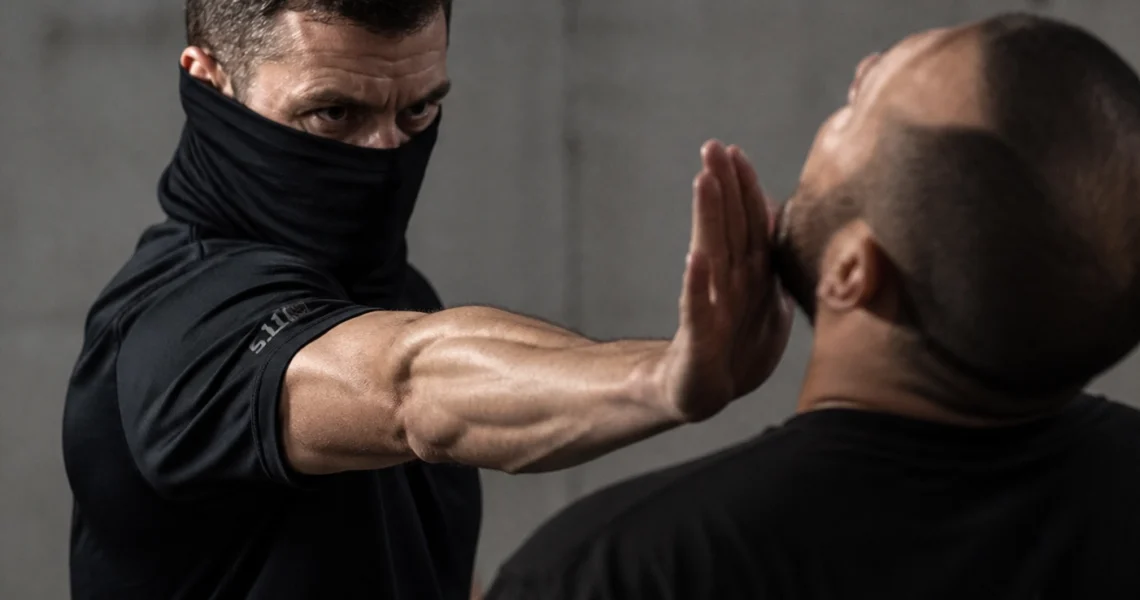
When it comes to tactical self defense miami, preparation is everything.
What happens when your gear fails, your draw is blocked, or you find yourself in a violent encounter where carrying hardware isn’t an option? Strip away the gadgets, the custom holsters, and the tactical gear. When life-threatening violence occurs at arm’s reach, mastering unarmed self defense is not an optional fallback—it is the foundation of personal security. Too many people rely entirely on tools to save them from violent situations they do not truly understand. However, your hands, arms, elbows, and mindset are weapons you carry everywhere without exception.
Whether you are navigating a non-permissible environment, caught off-guard in a sudden ambush, or forced to defend your family in close quarters, relying strictly on equipment creates a dangerous blind spot. In this comprehensive guide, we will explore why bare-knuckle preparedness matters, the fundamental principles of real-world physical conflict, and how to build a reliable personal defense strategy that relies on movement, leverage, and biomechanics rather than hardware.

Why Modern Threats Demand Effective Unarmed Self Defense
It is easy to fall into a false sense of security when you regularly carry a tool for protection. Yet tactical realists understand that violence often unfolds inside what combative experts call the “zero-to-three-feet range.” At this distance, an attacker does not give you time to adjust your stance, clear cover garments, or achieve a clean draw stroke. If an assault begins with a sudden shove, a headlock, or a sucker punch, your physical body must respond instantaneously before any gear can ever come into play.
Furthermore, daily life regularly places law-abiding citizens inside non-permissible environments. From airports and government facilities to corporate offices, educational institutions, and international travel, carrying weapons is frequently restricted or legally prohibited. In these environments, high-level unarmed self defense capability becomes your sole physical line of protection. If you haven’t trained your limbs to generate striking power, manipulate balance, and defend against strikes, you leave your physical integrity entirely to chance.
Understanding the dynamics of violent encounters also requires recognizing that not every physical confrontation legally justifies lethal force. In mid-tier altercations—such as dealing with an aggressive drunken individual or escalating verbal altercations—employing proportional force is essential. Mastering basic close-quarters combat training allows you to scale your physical response appropriately, protecting yourself while remaining within legal boundaries.
The Mindset Behind Realistic Unarmed Self Defense
Techniques mean very little without the appropriate mindset to execute them under extreme stress. The human body responds to sudden violent threats with an involuntary surge of adrenaline, causing auditory exclusion, tunnel vision, and loss of fine motor skills. Successful physical defense relies heavily on gross motor skills—simple, violent movements that require minimal dexterity and work reliably when your heart rate spikes to 180 beats per minute.
A proper tactical posture starts long before physical contact takes place. Proactive awareness, often discussed alongside core situational awareness principles, helps you recognize pre-threat indicators—such as target glancing, clenching fists, or sudden closing of distance—giving you precious seconds to act rather than react. However, when proactive avoidance fails, your mental mindset must shift instantly from passive compliance to overwhelming counter-aggression.
“In close quarters violence, hesitation is catastrophic. The goal of physical defense is not to duel, but to break the attacker’s momentum and secure an opportunity to disengage safely.”
Building a resilient combative mindset involves accepting that in a real fight, you may get hit. The objective of practical unarmed self defense is not to emerge completely untouched, but to maintain control of your stress response, absorb structural pressure, and deliver decisive counters that eliminate the threat.
Core Strikes and Fundamentals for Unarmed Self Defense
When training for real-world encounters, simplicity reigns supreme. Fancy martial arts kicks and intricate multi-step locks look impressive on screen, but they rarely survive the chaos of street violence. Instead, focus on high-probability strikes that utilize dense bones to target soft, vulnerable areas of an assailant’s anatomy.
1. Open-Palm Strikes
Closed-fist punches without hand wraps or gloves carry a severe risk of breaking small metacarpal bones against a target’s hard skull. Open-palm strikes eliminate this risk while transferring massive kinetic energy. By striking with the heel of the palm toward the opponent’s chin, nose, or jawline, you can snap the head back, induce brain rattle, and open up follow-up opportunities without destroying your hands. Palm strikes are a cornerstone of practical unarmed self defense because they preserve hand function for grabbing or door manipulation.
2. Low-Horizontals and Horizontal Elbows
When distance collapses completely, your forearms and elbows become your primary offensive tools. The point of the elbow is one of the densest bony structures on the human body. Generating rotational hip torque to drive an elbow strike into an attacker’s jaw, temple, or neck can instantly disable an assailant. Because elbow strikes work at tight ranges, they are particularly effective when pinned against a wall or ground surface.
3. Knee Strikes to Midsection and Groin
High kicks require exceptional flexibility, perfect balance, and clean footwork—luxuries rarely present during an ambush on slippery asphalt. Low knee strikes, driven forcefully into the groin, thigh nerve clusters, or lower abdomen, disrupt the attacker’s balance and base structure. Securing a firm grip on the assailant’s neck or shoulders while driving your knee upward unleashes devastating short-range power.
4. Hammer Fists
The hammer fist utilizes the dense bottom padded portion of a closed hand. It can be thrown vertically, horizontally, or backwards with minimal setup. Hammer fists are structurally sound, easy to execute under stress, and highly effective against the bridge of the nose, jawline, or neck.

Distance Management and Controlling the Reactionary Gap
Every physical encounter is dictated by range. Understanding distance management ensures you can defend yourself against incoming strikes while maximizing the effect of your own counters. Combatives instructors split range into three primary zones:
- The Pre-Contact Zone: Outside striking distance, where verbal de-escalation and escape paths are viable options.
- The Striking Zone: Within range of punches, kicks, and elbows. This is the most dangerous zone to linger in without control.
- The Clinch/Grappling Zone: Body-to-body contact where control of leverage, balance, and spatial posture determines survival.
Managing the reactionary gap is critical for unarmed self defense efficiency. If an aggressive stranger encroaches within arm’s reach while displaying hostile body language, maintain an active guard (such as an open-hands “de-escalation stance”). This posture signals non-aggression to bystanders while placing your hands high enough to instantly shield your head or strike if an assault begins.
Pressure Testing Over Pure Choreography
Knowing techniques intellectually does not translate to physical skill under duress. To make your skills functional, pressure testing is essential for anyone serious about unarmed self defense. Many traditional combat systems fall short because they train techniques against compliant partners who offer no resistance.
Real-world effectiveness requires progressive dynamic sparring and stress drills. Incorporate scenario-based training where partners offer realistic resistance, press forward aggressively, and force you to solve problems while exhausted. Studying validated historical methodologies of hand-to-hand combat systems highlights the importance of keeping training stress-focused, adaptive, and practical.
Without realistic stress exposure, even sound physical concepts collapse under adrenaline. Training with resistance teaches you spatial management, footwork under pressure, recovery from bad positions, and how to strike moving targets effectively.
Integrating Unarmed Combatives with Your Broader Safety Plan
Unarmed proficiency is not meant to replace situational awareness, verbal de-escalation, or escape planning. Rather, it serves as the glue holding your entire personal defense strategy together. If you routinely carry daily defensive gear, robust empty-hand combatives ensure you can fight off an initial attack, clear space, and retain your tools safely without being overwhelmed.
If you find yourself without gear, empty-hand skills ensure you are never defenseless. Your body becomes an adaptable instrument capable of absorbing impact, imposing physical leverage, and creating exit opportunities out of chaotic situations.
Conclusion: Mastering Unarmed Self Defense as a Lifelong Pursuit
Hardware can fail, holsters can bind, and security environments change depending on where your day takes you. However, your body remains constant. Committing to functional fitness, practicing mechanical strike fundamentals, and developing situational awareness builds self-reliance that no external tool can match.
True confidence does not come from what is attached to your belt; it stems from knowing that with or without hardware, your unarmed self defense skills render you a formidable, hard target. Begin training your fundamentals today—focus on simple, high-probability strikes, test your skills under pressure, and forge a mindset ready for real-world conflict.
Compare our training: Combatives vs MMA | CQC vs BJJ
FAQ
Q: What does tactical self defense miami entail?
A: It is real-world survival training and stress inoculation.
Q: How does this differ from sport MMA?
A: We focus on practical combatives rather than ring rules.
Q: Why choose this over BJJ?
A: Our focus is strictly on real world CQC and multi-threat scenarios.