CQC Training Near Me: What to Look for in a Real Close Quarters Combat School
July 30, 2026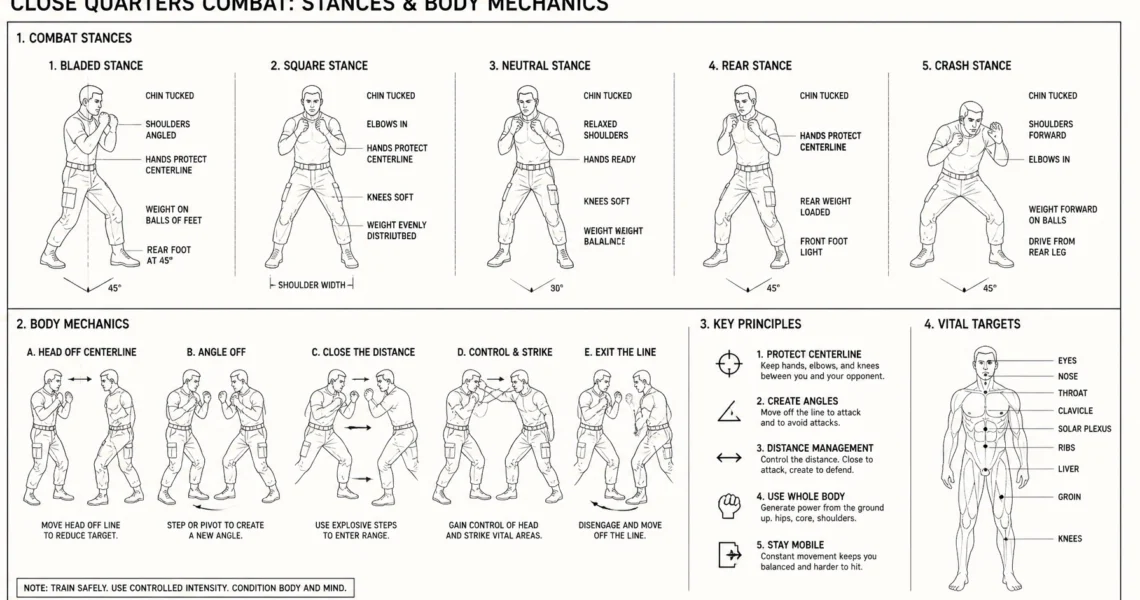
When it comes to tactical self defense miami, preparation is everything.
Ever wonder why most local martial arts workout routines leave you totally unprepared when someone actually tries to smash your face in on a concrete sidewalk? Most traditional combat styles focus on point-scoring, kata forms, and athletic trophies, completely ignoring the chaotic reality of actual street violence. If you are actively seeking authentic CQC training to protect yourself and your loved ones, you must learn how to filter out useless cardio-kickboxing fluff and martial arts “bullshido” from real-world combat systems. Real Close Quarters Combat is not a sport—it is a brutal, direct methodology designed for personal survival when de-escalation is no longer an option.
When searching for local combatives instruction, finding the right school requires understanding what genuine battle-tested training looks like. Legitimate CQC training prepares you for sudden violent assaults, weapon threats, multiple attackers, and the terrifying psychological surge of real adrenal adrenaline dumping. In this comprehensive guide, we unpack what separates an authentic reality-based combat academy from a flashy McDojo, highlighting the exact criteria you must look for before stepping foot on the mat.

What Separates Real CQC Training from Traditional Martial Arts?
To recognize a high-grade facility, you must first understand how real combatives differ from traditional martial arts and combat sports. You can explore our deep dive into combatives vs traditional martial arts for a complete breakdown of tactics, but the core difference lies in rules, context, and intent. Combat sports like Boxing, Brazilian Jiu-Jitsu (BJJ), and Muay Thai are fantastic for physical conditioning, timing, and pressure testing within a ruleset. However, street fights feature no referees, no weight classes, no gloves, and no guaranteed one-on-one engagements.
Authentic CQC training treats violence as an unscripted emergency. Historically, military close-quarters tactics emerged to give soldiers simple, high-probability techniques that work under maximum physiological stress (see Close-quarters combat history for tactical foundations). Modern civilian combatives take these same battle-proven principles and tailor them to self-defense legalities and urban self-defense scenarios.
Instead of memorizing dozens of intricate belt-test choreographies, effective CQC training focuses on gross motor skills—instinctive movements that function reliably when your heart rate spikes to 180 BPM, your peripheral vision tunnels, and fine motor skills degrade completely.
Core Pillars of an Effective CQC Training Program
When evaluating prospective combatives facilities, do not be fooled by slick social media marketing or walls covered in gold trophies. A legitimate reality-based combatives school builds its curriculum around four foundational pillars:
1. Stress Inoculation and Scenario-Based Training
You cannot learn to survive violence while operating entirely inside a comfortable, predictable environment. A top-tier facility utilizes scenario-based drills, full-contact protective suits (such as High-Gear or FIST gear), dynamic ambient lighting, and verbal aggression to trigger real adrenal responses in students. By exposing you to controlled, high-stress environments during CQC training, your brain learns to stay cognitive under pressure rather than freezing when real danger strikes.
2. Integrated Weapon Defense and Retention
In the real world, weapons are frequently involved—whether it is an edged weapon drawn during a robbery or an improvised blunt instrument grabbed off a table. Practical CQC training does not treat weapon defense as an afterthought or teach absurd “Hollywood” disarms that rely on precise hand placement against an unresisting opponent. True combatives teach aggressive counter-ambush tactics, weapon awareness, control of the enemy’s weapon limb, structural weapon retention, and the defensive deployment of your own emergency tools.
3. Environment and Context Adaptation
Real-world violence does not happen on uniform 2-inch puzzle mats under bright fluorescent lights. Authentic combatives schools force you to work against walls, inside confined spaces, around vehicle simulators, and on hard surfaces. Learning how to manage your balance on gravel, navigate around furniture, or clear obstacles while managing an aggressive threat is a critical component of any serious CQC training program.
4. Combative Mindset and Legal Reality
Physical skills are useless without the psychological willingness to turn the tables on an attacker. Developing real mental conditioning under violence enables you to switch instantly from passive situational awareness to explosive counter-violence. Furthermore, a professional combatives academy ensures students understand the legal continuum of force, self-defense laws, post-incident protocols, and how to communicate effectively with law enforcement after an event.
Major Red Flags to Avoid in Local Martial Arts Schools
Unfortunately, the self-defense industry is saturated with unaccredited instructors selling false security. Before committing to any local gym, keep your eyes open for these dangerous red flags:
- Zero Live Resistance or Sparring: If an instructor only demonstrates techniques on compliant, static partners who fall over at the slightest touch, run away. Without dynamic pressure testing, tactics crumble against a real violent predator.
- Absurd Weapon Disarms: If you are being taught to grab a fast-moving knife blade or spin around behind a gunman pointing a firearm directly at your chest from three feet away, the school is teaching dangerous fantasy over survival.
- Ego-Driven Instructor Cults: Real combatives instructors are humble, transparent about their background, and welcome tough questions. Beware of instructors who demand blind obedience or claim their style has “secret deadly techniques” too dangerous to test in real sparring.
- Ignoring Physical Fitness: While combatives techniques rely on leverage and biomechanics, physical conditioning matters. Fighting for your life is exhausting; a school that completely ignores cardio, grip strength, and functional conditioning is failing to prepare you for real violent clashes.
How to Evaluate a Local CQC Training Gym
When searching online for local options, don’t just sign up online—visit the school in person and audit a live class. Use this checklist during your evaluation:
- Audit a Class First: Observe how the instructor speaks to students. Is the environment focused, disciplined, and supportive, or is it chaotic and unsafe?
- Inspect the Equipment: Does the facility invest in heavy pads, striking shields, training knives, blue guns, and force-on-force protective headgear? High-quality equipment demonstrates a commitment to realistic pressure testing.
- Analyze the Student Base: Look at the long-term students. Are they executing strikes with power, solid balance, and crisp tactical movement, or do their movements look sloppy and uncoordinated?
- Ask About Backgrounds: Inquire about the lead instructor’s background. Have they trained with reputable military combatives programs, law enforcement tactical units, or accredited reality-based self-defense organizations?
Finding high-caliber CQC training requires diligence, but taking the time to vet your options ensures that the skills you build will actually serve you when your life is on the line.
Conclusion: Step Off the Bench and Start Training Real Combatives
The street does not care about your belt rank, how long you have practiced traditional forms, or how many martial arts movies you have watched. When an aggressive predator singles you out, only hard-earned muscle memory, tactical positioning, and relentless combative intent will pull you through. By seeking out legitimate, battle-tested CQC training, you transform yourself from potential target into an educated savage capable of protecting what matters most.
Take the next step today: research local reality-based self-defense academies, audit a trial session, ask hard questions about their pressure-testing methods, and dedicate yourself to consistent, practical preparation.
Compare our training: Combatives vs MMA | CQC vs BJJ
FAQ
Q: What does tactical self defense miami entail?
A: It is real-world survival training and stress inoculation.
Q: How does this differ from sport MMA?
A: We focus on practical combatives rather than ring rules.
Q: Why choose this over BJJ?
A: Our focus is strictly on real world CQC and multi-threat scenarios.