What Is Reality-Based Self-Defense? Why We Train for the Street, Not the Mat
July 30, 2026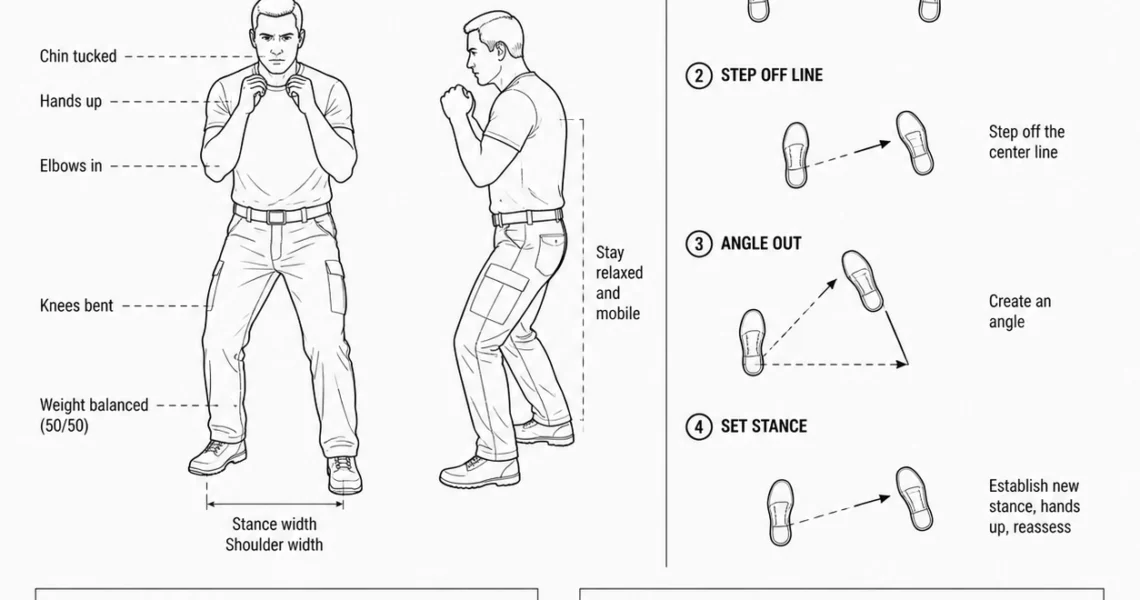
When it comes to tactical self defense miami, preparation is everything.
Ever wonder why so many martial artists get caught completely off guard in a real-world violent encounter? Despite holding a black belt in a traditional discipline or winning gold medals on the mat, many skilled practitioners find themselves severely overwhelmed when an unexpected altercation breaks out in a crowded parking lot, dark alleyway, or local establishment. The reason for this disconnect is simple: the street does not operate on rules, weight classes, referees, or padded floors. This stark reality is precisely where reality-based self-defense becomes essential for true personal security.
Unlike traditional combat sports designed for sportsmanship and point-scoring competition, reality-based self-defense focuses strictly on surviving real-world violence, managing chaotic stress responses, and returning home safely to your loved ones. In this article, we will examine why traditional martial arts often fail in life-threatening scenarios and why our methodology at Educated Savages prioritizes street survival over mat aesthetics.

What Is Reality-Based Self-Defense?
At its core, reality-based self-defense is a modern system of physical tactics, psychological conditioning, and situational awareness built around actual assault dynamics rather than formal tradition or athletic competition. Rather than memorizing static forms (katas) or practicing stylized moves under cooperative conditions, practitioners learn to react to unpredictable, asymmetric threats.
The term was popularized in late 20th-century tactical communities to distinguish functional protection systems from classical martial arts. According to Wikipedia’s overview of reality-based self-defence, these concepts prioritize gross motor skill usage, adrenalized decision-making, and legal justification over ritualized combat routines.
Real-world violence rarely begins with two consensual fighters touching gloves in a clean environment. Instead, realistic threat scenarios usually involve:
- Ambush Tactics: Attackers choose the time, place, and conditions, often attacking from blind spots or utilizing distractions.
- Asymmetric Force: Multiple aggressors, hidden weapons, or substantial disparities in physical size and strength.
- Unforgiving Environments: Concrete floors, low visibility, tight spaces, wet pavement, and physical obstacles like cars or furniture.
- Legal and Emotional Aftermath: Understanding the legal framework of self-defense, dealing with police interactions, and processing post-traumatic stress.
The Problem With Traditional Dojos and Combat Sports
Combat sports like Brazilian Jiu-Jitsu, Muay Thai, Boxing, and Judo offer phenomenal physical conditioning and genuine fighting efficacy within defined parameters. However, relying exclusively on sport fighting mechanics in an unscripted street encounter can create dangerous blind spots. The fundamental design of sport fighting teaches habits that can turn hazardous off the mat.
1. The Trap of Consensual Rules
In a tournament or ring fight, both participants agree to rules. There are no biting, eye gouging, weapons, or unexpected third parties jumping in from behind. When training strictly for sport, fighters develop muscle memory based on those boundaries. Pulling guard on concrete while an attacker’s buddy is standing nearby can lead to catastrophic head trauma.
2. The Myth of One-on-One Combat
Sport fights are strictly one-on-one. Real violence, however, frequently involves multiple attackers. A system of reality-based self-defense trains individuals to maintain spatial awareness, maneuver to avoid encirclement, and continuously search for secondary threats or available escape routes.
3. Ignoring Pre-Contact Cues and Verbal De-escalation
Traditional dojos rarely spend time teaching verbal boundaries, threat recognition, or de-escalation strategies. In real life, the best fight is the one you never participate in. Learning how to identify dangerous behavior, communicate assertively, and escape before physical contact occurs is a fundamental tenet of modern personal protection.
Core Pillars of Reality-Based Self-Defense Training
To prepare effectively for high-stress street encounters, training must bridge the gap between physical execution and human stress physiology. True reality-based self-defense rests on four foundational pillars:
1. Situational Awareness & Conflict Avoidance
The most effective defense strategy is avoiding danger altogether. By understanding Cooper’s Colors of Awareness (Code White through Code Red), students learn to identify potential red flags in their surroundings long before an aggressor closes the distance. Recognizing pre-assault indicators—such as target glancing, hand concealment, or unnatural pacing—gives you vital seconds to extract yourself from harm’s way.
2. Adrenaline Management & Gross Motor Skills
When faced with immediate violence, your body releases a massive surge of adrenaline. This sympathetic nervous system response triggers tunnel vision, auditory exclusion, loss of fine motor skills, and elevated heart rates. Elaborate wrist locks, complex joint manipulations, or high-flying kicks become nearly impossible to perform. Effective reality-based self-defense relies strictly on simple, high-percentage gross motor movements that work under severe physical stress.
“In a real crisis, you do not rise to the level of your expectations; you fall to the level of your training under stress.”
3. Weapon Awareness and Defense Dynamics
On the street, you must assume an aggressor might possess an edged weapon, blunt object, or firearm. Training must emphasize weapon identification, immediate retention, line-of-fire redirection, and aggressive counter-attacks. Modern reality-based self-defense teaches practitioners how to utilize everyday objects—such as tactical flashlights, keys, or belts—as force multipliers when necessary.
4. Legal Preparedness and Post-Conflict Protocols
Surviving the physical fight is only half the battle; surviving the legal fight comes next. Understanding reasonable force, duty to retreat (where applicable), state-specific self-defense laws, and proper communication with law enforcement immediately following an incident are essential components of comprehensive defensive training.
Why We Train for the Street, Not the Mat at Educated Savages
At Educated Savages in Miami, our mission is to empower individuals with practical survival tools. We believe that physical capability must be tempered with intellectual control—making you dangerous when necessary, but calm and controlled in daily life. Explore about the Educated Savages philosophy to learn how we cultivate this mindset.
When you train in our program, you will not spend hours practicing formal katas or preparing for belt tests based on compliance. Instead, our reality-based self-defense methodology subjects techniques to real-time stress testing, dynamic scenarios, and live force-on-force drills.
Key focus areas in our curriculum include:
- S.C.A.R.S. and Practical Strike Mechanics: Explosive, targeted striking designed to disable threats rapidly and create immediate escape opportunities.
- Street Ground Survival: Learning how to get back up to your feet immediately rather than lingering on the ground to look for submissions.
- Managing Multiple Aggressors: Tactical movement strategies to stack opponents and prevent getting cornered or swarmed.
- Scenario Pressure Testing: Recreating realistic environmental conditions, noise, and vocal aggression to desensitize students to violent adrenaline spikes.
If you are looking to build real-world capability, check out our self-defense classes in Miami to discover how targeted physical preparation can drastically improve your personal safety.
How to Transition from Sport Fighting to Reality-Based Self-Defense
If you already possess a background in martial arts like Brazilian Jiu-Jitsu, Boxing, or Wrestling, you have a solid foundation of physical athleticism and distance management. Transitioning to a system of reality-based self-defense does not require abandoning your current skill set—it simply requires modifying your tactical framework.
- Adjust Your Stance and Distance: Keep your hands higher and slightly open in a non-telegraphed “de-escalation stance” that protects your head while communicating non-aggression to bystanders and cameras.
- Prioritize Disengagement over Control: In a sport match, controlling an opponent on the ground leads to points or submissions. On the street, your primary goal is creating distance so you can escape.
- Always Scan for Secondary Threats: Train your eyes to instantly look over your shoulders the moment an opponent drops or backs away.
- Integrate Environmental Awareness: Always identify exits, potential tripping hazards, improvised defensive tools, and cover/concealment wherever you go.
Conclusion: Train How You Live
Violent encounters are fast, messy, and uncompromising. While traditional combat sports offer valuable athletic benefits, surviving an aggressive attack on the street requires a focused, pragmatic approach. Incorporating comprehensive reality-based self-defense into your lifestyle equips you with the situational awareness, psychological resilience, and physical tools needed to protect yourself and your family.
Stop training strictly for the mat. Start training for reality. Visit Educated Savages today to take control of your safety and build the confidence that only true preparedness can bring.
Compare our training: Combatives vs MMA | CQC vs BJJ
FAQ
Q: What does tactical self defense miami entail?
A: It is real-world survival training and stress inoculation.
Q: How does this differ from sport MMA?
A: We focus on practical combatives rather than ring rules.
Q: Why choose this over BJJ?
A: Our focus is strictly on real world CQC and multi-threat scenarios.