What Happens After You Win the Fight: The Legal Side of Self-Defense No One Talks About
August 3, 2026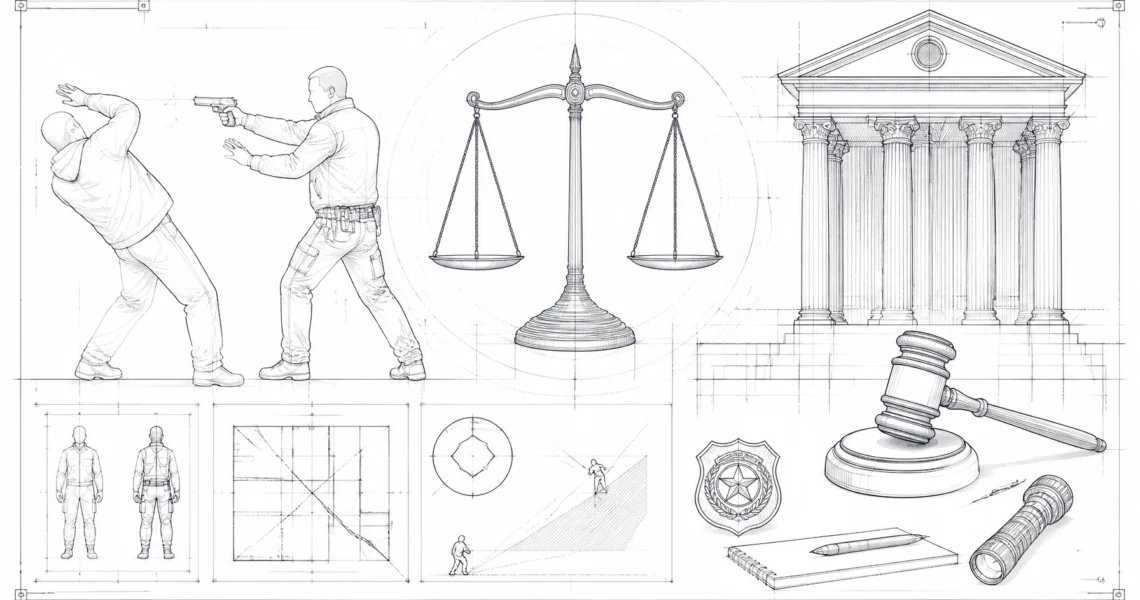
When it comes to tactical self defense miami, preparation is everything.
What Happens After You Win the Fight: The Legal Side of Self-Defense No One Talks About
Ever wonder what happens to your life the exact second the adrenaline dump clears and the attacker is bleeding on the concrete? Most martial arts studios and online creators focus entirely on physical tactics—how to throw a devastating right cross, escape a headlock, or disarm a knife attack. However, surviving the physical altercation is only half the battle. If you do not understand the principles of legal self defense, you might survive the fight on the street only to spend the rest of your life inside a prison cell.
Winning a physical encounter creates an immediate, high-stakes legal reality. The second the physical threat stops, a legal clock starts ticking. Investigators, prosecutors, and juries will scrutinize every movement you made, every word you spoke, and every decision you executed prior to, during, and after the incident. In this comprehensive guide, we demystify the critical legal realities of physical conflict so you can protect both your physical safety and your personal freedom.
Understanding Legal Self Defense: What the Law Actually Says
In simple terms, legal self defense is an affirmative defense. This means that when you claim you acted in self-defense, you are technically admitting to committing an act of violence—such as assault, battery, or homicide—but arguing that your actions were legally justified because you were protecting yourself or others from unlawful harm. Because you are asserting an affirmative defense, the legal burden often shifts to establishing specific legal criteria to justify why you resorted to physical force.
Courts do not evaluate violent encounters based on cinematic logic or street rules. Instead, legal systems rely on centuries of statutory law and legal precedent. According to Cornell Law School’s Legal Information Institute, self-defense legally justifies force when a defender reasonably believes that such force is immediately necessary to protect against an imminent, unlawful threat. Understanding how prosecutors evaluate these situations is essential for anyone serious about real-world protection.

The 5 Core Elements of Legal Self Defense
To successfully claim legal self defense in court, your actions must generally satisfy five core legal criteria. Missing even one of these elements can jeopardize your legal defense and lead to severe criminal charges.
1. Innocence
You cannot be the aggressor or the party who initiated the confrontation. If you provoke a fight, escalate an argument, or willingly engage in mutual combat, you lose the immediate right to claim self-defense unless you clearly attempt to withdraw and communicate your intent to cease fighting. Staying cool-headed and avoiding ego-driven arguments is essential to maintaining your status as the innocent party.
2. Imminence
The threat you face must be happening right now or be about to happen within seconds. You cannot use physical force against a threat that occurred in the past (which is legally considered revenge or retaliation) nor against a hypothetical threat that might happen far in the future. Force is only justified when the danger is active, immediate, and unavoidable.
3. Proportionality
The force you use must match the threat posed by the aggressor. You cannot use deadly force (e.g., using a weapon or executing lethal strikes) against a non-deadly threat (e.g., a simple shove or verbal abuse). A core rule of legal self defense is using only the force necessary to stop the threat and safely escape.
4. Avoidance (Duty to Retreat vs. Stand Your Ground)
Depending on your jurisdiction, you may have a legal duty to retreat if you can do so with complete safety before using force. In “Stand Your Ground” states, you are not legally required to retreat before defending yourself, provided you are in a place where you have a lawful right to be and are not engaged in illegal activity. However, even in Stand Your Ground jurisdictions, tactical escape is almost always legally and physically safer than staying to fight.
5. Reasonableness
Would a reasonable person, equipped with the same knowledge and facing the same circumstances as you at that moment, believe that force was necessary? Prosecutors and juries apply the “reasonable person standard” when evaluating your state of mind during the altercation.
What Happens Immediately After the Physical Threat Ends?
Once the violent attacker is neutralized or stops attacking, your immediate tactical mindset must instantly shift from physical defense to legal survival. The actions you take in the first 15 minutes post-fight will directly impact whether you walk free or face criminal charges.
Step 1: Check for Injuries and Create Distance
Assess yourself and your loved ones for injuries. Adrenaline conceals stab wounds and bone fractures. Move to a safe location if possible while keeping an eye on the aggressor, as they may recover or call for accomplices.
Step 2: Dial 911 Immediately
In the eyes of law enforcement, the person who dials 911 first is frequently viewed as the victim, while the person who flees or remains silent is often assumed to be the perpetrator. When speaking with emergency dispatchers, keep your statement brief and clear:
- State your location clearly.
- Declare that you were attacked and required assistance.
- Request medical aid for anyone injured (including the attacker, which demonstrates a lack of malice).
- Provide a description of yourself so responding officers do not mistake you for the suspect.
Step 3: Managing Law Enforcement Officers on Scene
When police arrive, keep your hands visible and follow all instructions immediately. Remember that police officers are securing a potential crime scene. You will be emotional, hyperventilating, and flooded with stress hormones. Avoid making detailed, off-the-cuff statements about what transpired. Briefly state that you were attacked, point out key physical evidence or witnesses, and clearly state: “I am willing to cooperate fully, but I wish to speak with an attorney before giving a detailed statement.”
Practicing legal self defense requires knowing when to speak and when to remain silent. Offhand remarks made while in shock are frequently misconstrued in police reports and used against defendants in court.
The Hidden Costs: Financial and Psychological Realities
Even when a court rules that your actions were entirely justified under legal self defense standards, physical altercations leave lasting scars. Retaining a qualified criminal defense attorney for a self-defense trial can easily cost tens of thousands—or hundreds of thousands—of dollars in legal retainer fees, expert witness costs, and court expenses.
Furthermore, civil lawsuits pose another significant hurdle. An attacker or their family may sue you for civil damages, medical bills, or wrongful injury. Navigating these court proceedings requires patience, legal representation, and solid documented evidence that your actions were legally reasonable and proportional.
How Practical Martial Arts Training Enhances Legal Self Defense
Not all physical training is created equal when it comes to legal protection. Traditional or overly aggressive street-fighting systems often teach excessive violence without teaching escalation control or de-escalation skills. To build a robust framework for legal self defense, training must incorporate situational awareness, verbal de-escalation, controlled restraint techniques, and post-encounter management.
At Educated Savages MMA & Self Defense, our approach bridges the gap between effective physical combat and smart, legal decision-making. By mastering practical arts like Brazilian Jiu-Jitsu (BJJ), Wrestling, and Muay Thai, practitioners gain the control needed to apply proportional force rather than relying on uncontrolled or lethal violence.
For instance, an untrained person who panics during a confrontation might resort to striking someone repeatedly in the head, leading to severe brain injury or death. Conversely, someone trained in controlled grappling can control a violent person on the ground without inflicting permanent injury. This level of physical control drastically improves your odds of upholding legal self defense claims in court.
Key Takeaways for Staying Safe and Legally Protected
To ensure your self-defense strategies protect your body and your freedom, keep these fundamental principles in mind:
- Avoid conflicts whenever possible: De-escalation and running away are always superior to fighting in court.
- Match force appropriately: Never escalate a non-deadly situation into a deadly force encounter.
- Be the first to call 911: Establish yourself as the victim who sought assistance immediately.
- Seek legal representation: Never give detailed police statements while in a state of physical or emotional shock.
- Train at a modern facility: Choose structured self-defense training programs that emphasize control, tactical judgment, and de-escalation alongside combat techniques.
Final Thoughts on Legal Self Defense
True self-defense is holistic. It starts with awareness before the fight, physical proficiency during the fight, and smart decision-making after the fight. Understanding legal self defense ensures that when you step up to protect yourself or your loved ones, you are fully prepared to navigate the legal system with confidence and integrity.
If you want to build real-world physical skills paired with tactical awareness, explore our classes at Educated Savages and take control of your personal safety today.
Compare our training: Combatives vs MMA | CQC vs BJJ
FAQ
Q: What does tactical self defense miami entail?
A: It is real-world survival training and stress inoculation.
Q: How does this differ from sport MMA?
A: We focus on practical combatives rather than ring rules.
Q: Why choose this over BJJ?
A: Our focus is strictly on real world CQC and multi-threat scenarios.