Carjacking in Miami: The First 10 Seconds Decide Everything
October 30, 2026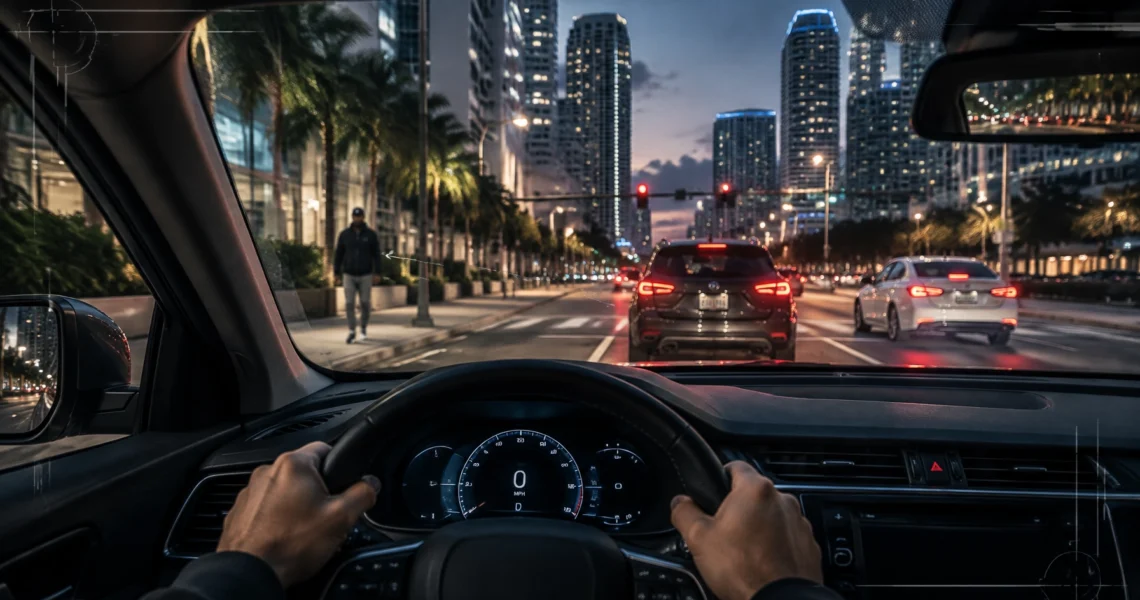
October 28, 2026
What matters in the first 10 seconds of a carjacking: the car, or getting everyone out alive?
A carjacking moves fast. Your response doesn’t need to be complicated. The priority is keeping yourself and your passengers safe, not winning an argument, saving a vehicle, or proving you can fight.
The first 10 seconds aren’t a magic countdown. They’re a useful way to think about a sudden event: recognize what’s happening, make one clear decision, and act on it. Miami Police Department safety guidance points to common settings where a car is stationary, including parking areas and traffic stops. That makes the moments before you get in, and while you’re stopped, worth preparing for.
Before the attempt
Preparation isn’t paranoia. It’s removing small problems before they pile up under pressure.
In a parking lot or garage, choose a well-lit space when possible. Before approaching your vehicle, take a moment to check the area around it. Have your keys ready, get inside without lingering, and lock the doors once you’re in. If something feels off, don’t force yourself to walk to the car. Return to a staffed public place and ask security or someone you trust for help.
At a stoplight, keep your attention on the road and the space around your vehicle. Leave enough room from the car ahead that you can maneuver if the situation allows. Keep doors locked and valuables out of sight. These are practical steps, not guarantees; no single precaution makes you immune to crime.
A person standing nearby, approaching a vehicle, or asking for help is not proof of an attack. Don’t treat ordinary behavior as evidence. Instead, notice whether something is changing around you, and give yourself permission to avoid an interaction or leave when it’s safe.
For more prevention basics, see the Miami Police Department’s safety tips and the Florida Highway Safety and Motor Vehicles vehicle-theft guidance.

The first seconds: recognize, decide, move
Adrenaline can narrow your attention. Your hands may shake. You may have trouble processing a sentence or deciding what to do next. That response is normal. You don’t need a perfect plan; you need a simple priority.
If someone demands the car
If an armed person demands your vehicle, comply first. A car can be replaced. You and your passengers cannot. Don’t argue, reach suddenly, chase the vehicle, or fight to keep the keys.
Keep movements controlled and, when possible, tell the person what you’re doing before you move. Don’t reach for a phone, bag, or child seat without explaining it if the person is watching you. Follow instructions that allow you to get out safely, then move away from the vehicle. The Florida Attorney General’s carjacking guidance also emphasizes prioritizing personal safety over property.
If you’re with family, focus on getting everyone out of immediate danger. Don’t split attention between the vehicle, belongings, and passengers more than necessary. Once you’re clear, move toward a populated, staffed place if you can.
If the situation changes
A demand for a car is different from being forced into another vehicle or taken somewhere against your will. If the person’s actions create an immediate threat of death or serious harm to you or your family, compliance may not resolve the danger. If a disarm becomes necessary in that extreme situation, rely only on deeply trained muscle memory, not an improvised technique or a move you’ve only watched.
That is not a reason to fight for the car. It is a last-resort response to an immediate threat to life or serious safety. In every other self-defense situation, define success as creating a window to disengage and escape.
Parking lots and stoplights
A carjacking attempt can begin when you’re getting into a vehicle, stopped in traffic, or dealing with an unexpected interruption. The details vary. Don’t build your plan around guessing what a stranger intends.
At a stoplight, don’t get out to confront someone or inspect a minor disturbance if you feel unsafe. If you can leave without putting yourself or others at greater risk, move toward a populated, well-lit location. Keep traffic and pedestrians in mind. Don’t deliberately cause a collision or make a dangerous maneuver.
If another vehicle bumps yours and you suspect it may be a setup, Miami Police guidance recommends staying inside with the doors locked, using hazard lights, and going to a safe public place to contact police if you can do so safely. The right choice depends on the immediate conditions; avoid turning a suspicious moment into a crash or another emergency.
In a parking area, you can decide not to approach your car. Go back inside, ask staff for help, or wait somewhere safer. Leaving a vehicle behind is inconvenient. Getting cornered beside it is worse.

The decision that matters
Under stress, people can get stuck trying to work out whether they’re “allowed” to comply or whether they should resist. Keep the decision plain:
- If the demand is for property and compliance lets you leave, give up the property.
- If you or your family face an immediate threat of death or serious harm, prioritize survival.
- If there is a safe opportunity to disengage, take it. Don’t stay to punish, chase, or prove anything.
That’s the real-world distinction. Self-defense isn’t a contest, and a carjacking isn’t a test of courage. The goal is to create a chance to get clear.
At Educated Savages, our approach is “Zero Theory, Zero Filters”: practical training shaped around real-world pressure, not a fantasy of controlling every variable. Training can help people rehearse simple decisions and movements, but no class can guarantee an outcome. Our adrenaline-response training article explains why practice under pressure matters.
After you’re clear
Once you’re safe, call 911. Don’t follow the person or try to recover the vehicle yourself. Give the dispatcher your location and what you can recall: vehicle make, model, color, license plate, direction of travel, and a description of the person or any weapon. Don’t delay the call to collect details.
If someone is injured, say so immediately. After police have been contacted, notify your insurer and follow the steps they require. The Miami Police Department’s reporting page explains its reporting options; an active emergency belongs with 911, not a non-emergency report.
Train the decision, not the fantasy
Reading advice is useful. Rehearsing a simple response is better. Under adrenaline, complicated plans can fall apart. Practice staying composed, communicating clearly, complying when property is demanded, and moving toward safety when an opportunity opens.
Educated Savages offers a free first-class session Monday, Wednesday, and Friday at 7:00 PM in Downtown Miami. Monday and Friday group classes meet at 55 NE 2nd St, Miami, FL 33132; Wednesday sessions meet at Miami Circle. See the class schedule and registration details.
No car is worth a damn if keeping it means putting a life at risk. In those first seconds, make the decision that gets you and your family out alive.