Close Quarters Combat for Civilians: How to Survive in Tight Spaces When Running Isn’t an Option
August 3, 2026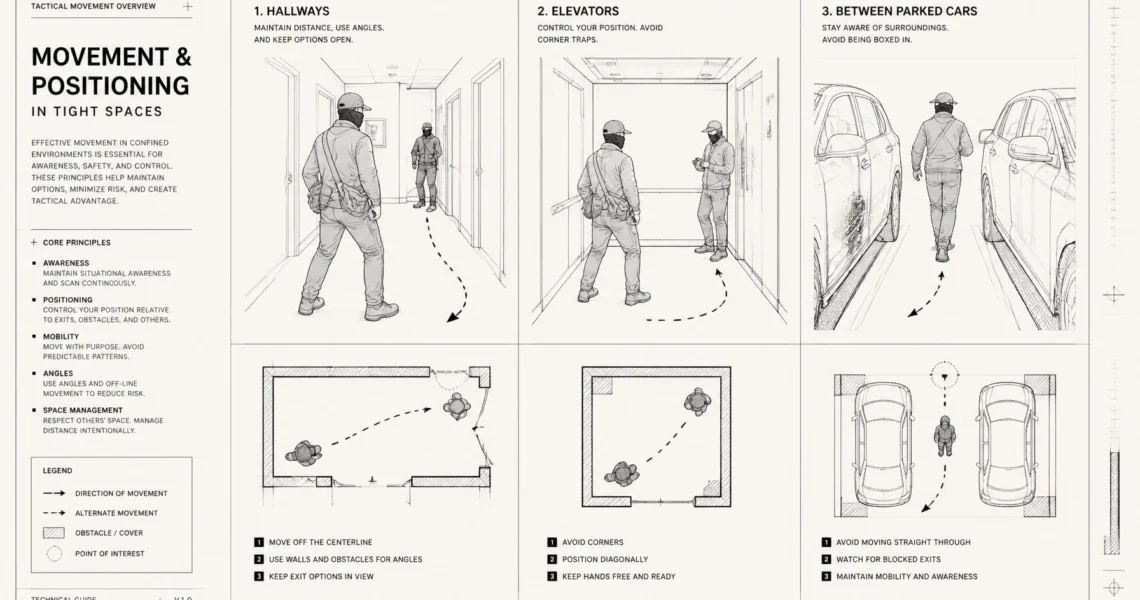
When it comes to tactical self defense miami, preparation is everything.
Imagine standing in a packed elevator, a narrow stairwell, or a cramped hallway between parked cars. Suddenly, an aggressive threat enters your personal space. You have no room to retreat, no clear exit route, and zero opportunity to create distance. In these critical moments, running simply isn’t an option. Mastering practical close quarters combat gives ordinary civilians the survival tools needed to neutralize threats when space is severely restricted. While many self-defense programs focus on wide-open spaces, real-world physical violence frequently happens in tight, enclosed environments where every inch matters.
To survive a violent encounter in a claustrophobic space, you must discard flashy Hollywood martial arts techniques. Throwing high kicks, sweeping roundhouses, or elaborate wrist locks requires room, time, and physical leverage that a tight alleyway or small room will never afford you. Instead, surviving tight-space violence demands a shift toward streamlined, brutal efficiency built around violent geometry and leverage.
The Reality of Violence in Confined Spaces
Most violent physical assaults do not start at a polite sparring distance. Muggers, attackers, and violent individuals rely on surprise, ambush tactics, and proximity to overpower their targets before a response can be mounted. When you are cornered against a wall or stuck inside a locked space, the fundamental rule of self-defense—creating distance and escaping—is temporarily revoked.
In these tight quarters, the dynamics of physical conflict change dramatically:
- Mobility is Restricted: Standard footwork, tactical retreat, and lateral movement become nearly impossible.
- Visibility is Reduced: Low light, tight angles, and sudden movement make it difficult to see incoming attacks or hidden weapons.
- Reaction Time Shrinks: Because the attacker is already within arm’s reach, your reaction window drops from seconds to split seconds.
- Leverage Shifts: Traditional striking power generated through full hips rotation is limited by surrounding barriers.
Understanding these environmental constraints is the foundation of practical self-defense. Developing a resilient self-defense mindset allows you to recognize that when space disappears, your aggressiveness and direct counter-offense must immediately scale up to compensate.

Essential Close Quarters Combat Principles for Civilians
Effective close quarters combat relies on core physical principles rather than memorized sequences. When adrenaline spikes and spatial boundaries collapse, simple and aggressive biomechanics will always beat complex martial arts techniques.
1. Control the Centerline and Frame Up
In narrow spaces, maintaining structural integrity is essential. If an attacker compresses your posture against a wall, your ability to defend yourself collapses. Creating tight defensive frames using your forearms and elbows protects your neck, head, and vital organs while creating just enough structural space to launch short-range counter-attacks.
2. Utilize Short-Range Kinetic Weapons
When you cannot extend your limbs for full punches or kicks, your elbows, knees, palm heels, and head become your primary tools. An elbow strike generates tremendous rotational force even over a distance of just a few inches. Knees delivered to the groin, thighs, or midsection require minimal wind-up and can break an attacker’s balance in tight quarters.
3. Target High-Vulnerability Areas
When leverage is limited, targeting soft tissue and vital anatomical structure becomes mandatory. Strikes aimed at the eyes, throat, ears, and groin produce immediate physiological reactions, forcing the attacker to release grips or momentarily disengage, granting you the crucial window needed to escape.
For more detailed breakdowns on tactical survival, review the close-quarters battle standards documented across historical military and law enforcement defensive tactics programs.
Essential Close Quarters Combat Techniques for Confined Spaces
When trapped in a restricted environment, executing targeted close quarters combat techniques quickly can mean the difference between surviving and becoming incapacitated. Here are the most reliable short-range counters every civilian should practice.
The Palm-Heel Strike and Drive
Traditional closed-fist punches in confined areas carry a high risk of breaking your hand against nearby walls, doors, or car frames. A open-palm strike uses the thick heel of your hand to drive upward into an opponent’s chin or nose. This thrust compresses their neck, disrupts their vision, and forces their posture backward without risking hand injuries.
The Horizontal and Vertical Elbow Spear
Elbows are among the most powerful weapons in close quarters combat. Because the point of the elbow consists of dense bone backed by large muscle groups, it delivers destructive energy over micro-distances. A horizontal elbow slash across the jaw or a vertical spear elbow driven through the centerline can instantly neutralize an incoming aggression inside an elevator or vehicle.
Continuous Upward Knee Strikes
If an attacker attempts to grab your clothing, tackle you, or pull you into a headlock, driving sharp knees straight up into their groin, stomach, or ribs breaks their forward momentum. Combining knee strikes with control of the attacker’s head or shoulders allows you to drive their head down into incoming strikes.
Using the Environment as an Ally
A cramped environment presents dangers, but it also provides unique tactical advantages if you know how to use it. Surrounding walls, objects, and architectural features can quickly become secondary weapons or defensive shields.
Consider how you can turn tight surroundings to your advantage:
- Walls as Leverage: If pushed against a wall, use it to anchor your spine and drive forward with short, explosive hip strikes rather than allowing yourself to be pinned passively.
- Environmental Barriers: Put objects—such as tables, counter tops, or trash cans—between yourself and the threat to force the attacker through narrow choke points.
- Improvised Weapons: Everyday items carried in tight spaces (keys, tactical pens, heavy water bottles, or flashlights) magnify the impact of short-range strikes.
Pairing environmental awareness with proactive situational awareness ensures that you recognize potential escape avenues or improvised defensive implements before conflict escalates into physical violence.
Developing a Mindset for Close Quarters Combat
Technique alone will not save you in a high-stress, tight-space encounter. Survival in tight quarters requires mental toughness and rapid decision-making. When caught in a violent ambush within a confined area, hesitation is catastrophic.
To build an effective mental framework for tight-space encounters:
- Accept the Reality of Getting Hit: In close proximity combat, you will likely sustain impact. Accepting this reality ahead of time eliminates the shock response when physical contact occurs.
- Switch from Defensive to Offensive Mindset: The fastest way to survive a close-range attack is to immediately counter with overwhelmed force, seizing momentum back from the assailant.
- Train Under Stress: Practice physical drills in simulated tight environments—such as doorways, corners, or small rooms—to build confidence under realistic spatial constraints.
Committing to regular practice in realistic close quarters combat principles builds the muscle memory and psychological resilience needed to remain calm, focused, and effective under pressure.
Conclusion: Master Tight-Space Survival Today
When running away is impossible, your willingness to fight intelligently within tight spaces determines your safety. Understanding the dynamics of restricted space, mastering short-range striking tools like elbows and knees, and using the surrounding environment to your advantage forms the backbone of civilian survival tactics.
By incorporating functional close quarters combat methodologies into your personal security preparation, you prepare yourself to handle unexpected violence wherever it occurs—no matter how narrow the space or how limited your options may seem.
Compare our training: Combatives vs MMA | CQC vs BJJ
FAQ
Q: What does tactical self defense miami entail?
A: It is real-world survival training and stress inoculation.
Q: How does this differ from sport MMA?
A: We focus on practical combatives rather than ring rules.
Q: Why choose this over BJJ?
A: Our focus is strictly on real world CQC and multi-threat scenarios.