The Adaptation Gap: What Happens When Your Attacker Changes Their Strategy Mid-Fight?
August 14, 2026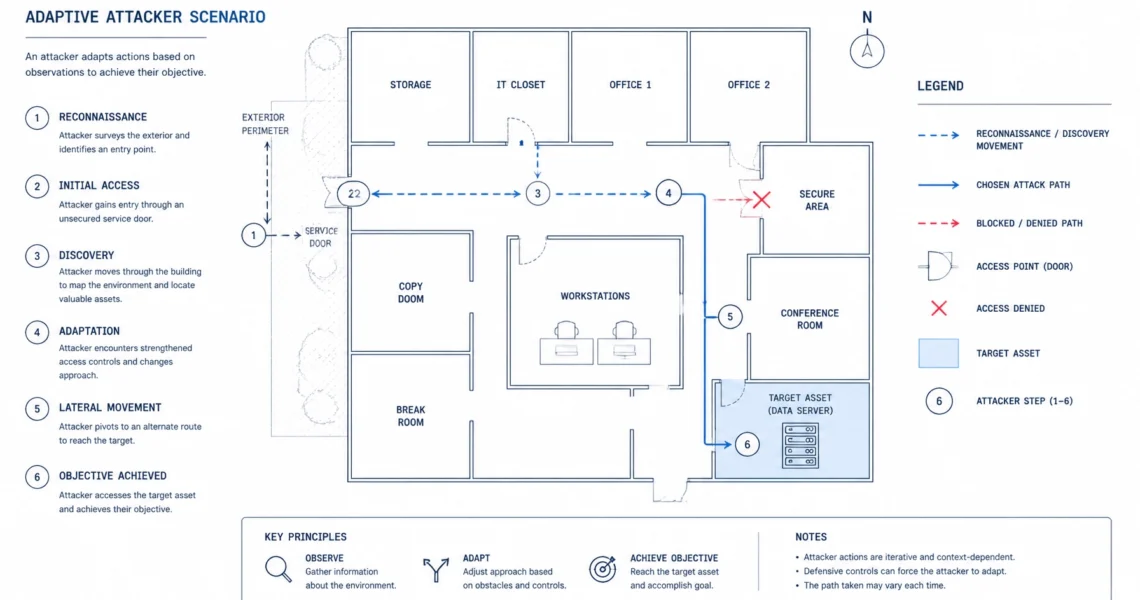
When it comes to tactical self defense miami, preparation is everything.
Ever wonder why so many highly trained martial artists freeze the exact moment an attacker does something completely unexpected? You can spend years perfecting clean technical execution, practicing precise sweep movements, and mastering submissions in a safe, controlled environment. Yet, when faced with an unscripted, violent confrontation outside the studio, many practitioners experience a sudden, paralyzing mental delay known as the adaptation gap. Mastering real world defense requires far more than memorizing static combinations or drilling with compliant training partners. It demands the raw cognitive flexibility to react, recalibrate, and survive when an aggressive attacker shifts their strategy mid-fight.
In traditional martial arts schools, training drills often follow a predictable rhythm: your partner throws a specific prescribed punch, you block at a designated angle, step offline, and deliver a clean counter-strike. However, violence outside the gym is fundamentally chaotic, asymmetric, and deeply unpredictable. When an assailant suddenly changes levels, attempts to slam you onto concrete, draws a concealed weapon, or brings an unseen accomplice into the fray, rigid mental scripts shatter instantly. Understanding what the adaptation gap is—and actively training to bridge it—is the single most crucial factor separating gym-level performance from actual physical survival.
What Is the Adaptation Gap in Real World Defense?
The adaptation gap represents the critical time delay between an unexpected tactical event and your brain’s ability to process the change and execute an effective counter-strategy. In fast-paced physical altercations, this delay frequently manifests as a freeze response, hesitation, or the dangerous impulse to repeatedly execute a failed technique that no longer matches the evolving physical situation.
At the core of effective real world defense lies human cognitive processing speed. Military strategist Colonel John Boyd conceptualized this dynamic through the famous OODA Loop framework—Observe, Orient, Decide, and Act. Whenever a physical conflict occurs, both you and your opponent are continuously cycling through these four mental stages.
When an attacker alters their tactics mid-fight—such as abruptly transitioning from a verbal argument into a aggressive double-leg takedown attempt—they violently disrupt your OODA Loop. Your brain is instantly forced to abandon its active plan, revert to the “Observe” phase, and re-orient itself to a completely new threat profile. If your prior training has not conditioned your mind for dynamic shifts, the time lag required to process this new reality creates a dangerous adaptation gap. In high-stakes combat situations, even a split-second delay can lead to catastrophic consequences.
Why Choreographed Martial Arts Drills Fall Short
Traditional martial arts curriculum relies heavily on pattern recognition and repetitive muscle memory. While repetition is undeniably vital for developing foundational body mechanics, static drilling can easily foster a dangerous illusion of security. When a training partner offers predictable responses, complex defensive techniques look effortless and clean. However, effective real world defense is defined by fully uncooperative opponents who actively resist, adapt, and exploit your mistakes in real time.
If your defensive training consists exclusively of rolling under sporting regulations or practicing preset self-defense steps, you may find yourself unprepared for an adversary who bites, strikes from within your guard, or uses raw physical strength to slam you into hard surfaces. To survive real combat dynamic shifts, martial artists must integrate functional, resisting grappling methodologies like those explored in Brazilian Jiu-Jitsu for street defense, while deliberately stripping away assumptions that rely on synthetic environments or referee interventions.
When static training dominates your routine, your nervous system becomes tethered to predictable conditions. The moment an adversary breaks the script, your mind searches frantically for a playbook that does not exist. Eliminating the adaptation gap requires abandoning static choreography in favor of fluid, unscripted feedback loops during everyday practice.
Common Mid-Fight Shifts and How Attackers Change the Script
To cultivate reliable real world defense habits, you must understand how physical fights evolve on the ground and on the feet. Violent attackers rarely follow a structured game plan; instead, their actions pivot rapidly based on adrenaline, frustration, panic, or tactical opportunity. Below are three common mid-fight strategy shifts that regularly dismantle rigid defensive game plans:
- Sudden Level Changes and Takedowns: An attacker who begins losing a standing striking exchange will frequently panic and shoot forward to tackle you to the ground, instantly shifting the engagement from striking range to ground fighting survival.
- Introduction of Concealed Weapons: An exchange that begins as a bare-knuckle brawl can escalate in an instant if an opponent draws a knife, blunt instrument, or makeshift weapon mid-clinch.
- Third-Party Accomplice Interventions: A single-attacker scenario can transform into an overwhelming multiple-opponent ambush if an unseen accomplice enters the fight from your physical blind spot.

Navigating these unpredictable tactical transitions requires continuous spatial awareness and dynamic posture management. Integrating core principles from tactical situational awareness guides enables practitioners to recognize pre-threat indicators and structural changes before an attacker’s shift completely overwhelms their position.
How to Train for Real World Defense Adaptability
Closing the adaptation gap requires a fundamental change in how you approach your daily training. Rather than practicing fixed sequence answers against compliant partners, high-level real world defense requires “Alive Training”—a methodology rooted in resistance, timing, dynamic movement, and spontaneous decision-making.
Alive training introduces unpredictable variables into every exercise. For example, instead of practicing a standard guard pass against a static partner, your training partner might be instructed to suddenly switch from grappling to heavy ground-and-pound, attempt to stand up and escape, or deploy a training blade. This forces you to analyze threat priority and adapt your defensive structure instantaneously under pressure.
By regularly exposing your central nervous system to unexpected operational changes, you desensitize your mind to chaos. Over time, your real world defense capability evolves from a fragile collection of memorized techniques into an intuitive, highly adaptable system of practical problem-solving.
Tactical Frameworks to Bridge the Adaptation Gap
When an violent attacker alters their strategy mid-fight, physical technique alone cannot save you if your mind is overwhelmed. Developing effective real world defense capabilities requires psychological resilience alongside dynamic structural control. Here are key frameworks to maintain tactical dominance when the script breaks down:
1. Manage Distance and Control Frames Aggressively
When an unexpected change occurs, your immediate priority must be buying time to reset your cognitive loop. Utilizing heavy frames, controlling the opponent’s biceps, or establishing a strong spatial boundary prevents immediate damage while your brain processes the new tactical scenario.
2. Prioritize Positional Dominance Over Submissions
Attempting complex, high-risk submissions during a chaotic street encounter often leaves you exposed to sudden counter-attacks or level shifts. Focus on securing dominant positions—such as mount, back control, or standing disengagement options—that limit your opponent’s ability to change strategies effectively.
3. Cultivate Stress Immunity via Scenario Pressure Testing
Adrenaline surges cause tunnel vision, auditory exclusion, and degraded fine motor skills. By regularly engaging in scenario-based pressure testing, you condition your body to maintain operational control under extreme physiological stress, minimizing the freeze response when an attacker changes tactics.
Conclusion: Elevate Your Practical Real World Defense
The adaptation gap is where real-world altercations are ultimately won or lost. When an aggressive attacker alters their strategy mid-fight, your survival depends not on how many choreographed moves you have memorized, but on how fast you can adapt to unscripted violent reality.
By transitioning away from static martial arts routines and embracing dynamic, pressure-tested methodologies, you cultivate the mental agility and tactical resilience required for successful real world defense. Stop training for idealized fights, and start building the adaptive mindset necessary to handle the chaotic, unscripted truth of real-world conflict.
Compare our training: Combatives vs MMA | CQC vs BJJ
FAQ
Q: What does tactical self defense miami entail?
A: It is real-world survival training and stress inoculation.
Q: How does this differ from sport MMA?
A: We focus on practical combatives rather than ring rules.
Q: Why choose this over BJJ?
A: Our focus is strictly on real world CQC and multi-threat scenarios.