How to Know If Your Self-Defense School Is Teaching You Choreography vs. Reality
August 5, 2026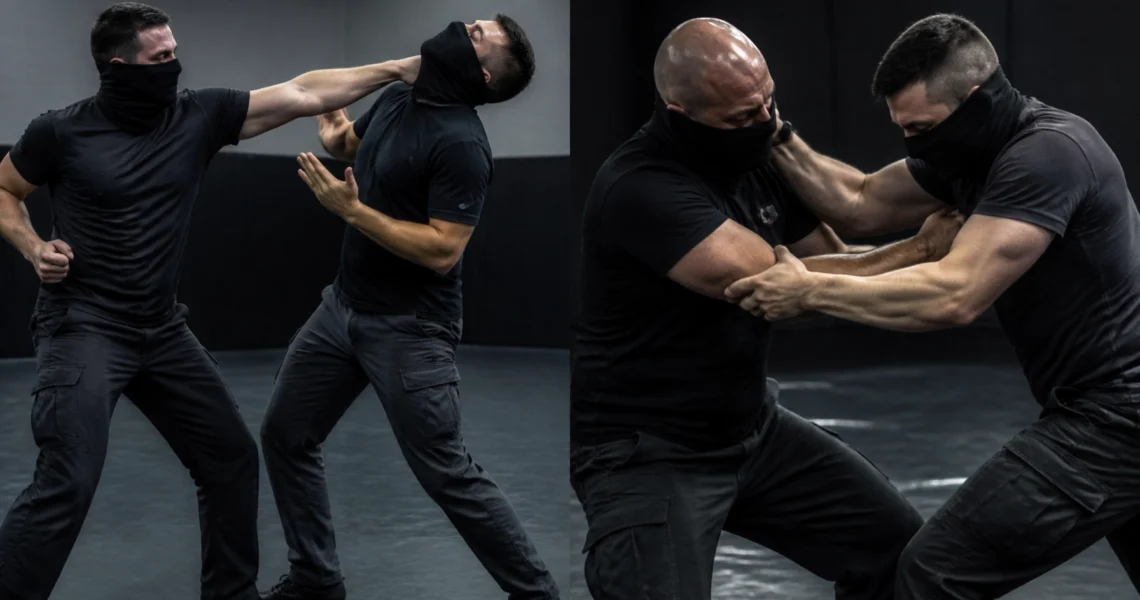
When it comes to tactical self defense miami, preparation is everything.
How to Know If Your Self-Defense School Is Teaching You Choreography vs. Reality
Ever wonder why your martial arts instructor’s technique falls apart the second a resisting training partner stops cooperating and actually tries to crack your jaw? Let’s be honest for a second. Most people walking into local training academies are paying hard-earned money to learn how to survive a sudden violent encounter. Unfortunately, what many are actually getting is an elaborate dance routine disguised as functional combat. If you want true personal security, finding a program that focuses on realistic self defense is the single most important factor in whether you survive a real-world violent attack or end up in an emergency room.
In the modern martial arts industry, there is a massive gap between compliant choreography and authentic violent dynamics. Far too many traditional schools trade real-world efficacy for aesthetic perfection, cooperative drills, and endless belt progressions. In this comprehensive guide, we will break down how to audit your current training program, identify dangerous red flags, and ensure you are building tactical skills that actually function under severe psychological and physical stress.
The Hidden Danger of Choreographed Martial Arts
Choreography in martial arts feels great. It creates a smooth, fluid flow where defender and attacker move in perfect harmony. You block a slow, telegraphed punch, execute a complex three-step counterattack, joint-lock your opponent, and throw them cleanly to the mat. You walk away feeling like an absolute action hero.
However, this creates a dangerous cognitive trap known as “compliant drill syndrome.” When an attacker in the gym behaves like a movie stuntman—stepping forward, punching once, and freezing in place while holding their arm out—they are feeding you false positive feedback. In an actual violent assault, real attackers do not throw single telegraph punches and freeze. They rush, tackle, grab clothing, strike repeatedly with full force, or deploy concealed weapons. Training exclusively against passive, cooperative partners builds bad muscle memory that breaks down instantly during real combat.
Without high-intensity pressure testing and unpredictable resistance, students develop an unearned sense of security. To develop true combat capability, your training must shift away from pre-arranged sequences and focus on dynamic, realistic self defense principles that account for human panic, chaos, and asymmetry.
5 Red Flags Your School Teaches Choreography Over Realistic Self Defense
If you want to know whether your school is preparing you for real life or simply teaching you martial arts choreography, look closely at how your daily classes are structured. Here are five major red flags that indicate your academy is prioritizing performance art over practical survival:
1. The “Punch-and-Freeze” Attack Pattern
Watch how training partners act during partner drills. Does the “attacker” step forward with a long, classic step-punch and then remain completely still while the defender executes five counter-strikes? This is the hallmark of scripted training. In realistic self defense, an attacker continues to press, strike, grab, or retreat. If your partner freezes like a statue to make your technique look clean, your brain is being trained to rely on a non-existent target.
2. Complex, Multi-Step Counterattack Sequences
If a self-defense technique requires you to remember a six-part sequence under stress—such as trapping a wrist, stepping behind a leg, applying an wrist lock, pivoting 180 degrees, and sweeping a heel—it will almost certainly fail in an actual street fight. Under high physiological stress (when your heart rate spikes above 145 beats per minute), fine motor skills degrade rapidly. Authentic, realistic self defense relies heavily on gross motor movements, simple aggressive forward pressure, and direct force application.
3. Zero “Aliveness” or Variable Resistance
Renowned martial artist Matt Thornton introduced the concept of “Aliveness” in martial arts training, which requires three key elements: movement, timing, and energy. If your drills lack any of these elements—meaning your partner doesn’t move unpredictably, doesn’t force you to timing adjustments, and offers no physical resistance—you are practicing choreography. A high-quality curriculum incorporates progressive resistance so that techniques are tested against non-compliant partners.
4. Neglecting Environmental Awareness and Pre-Contact Phase
Violent encounters rarely begin with two fighters standing squared up in neat stances on padded mats. Real fights start with verbal harassment, ambushes in parking lots, physical encroachment, or sudden sucker punches. If your instructor never covers situational awareness, verbal de-escalation, managing distance, or pre-contact threat indicators, you are only learning half the equation.
5. No Sparring or Pressure Testing
Can you apply your techniques against someone who is actively trying to hit you back? If your school bans controlled sparring or dynamic stress scenarios, you will never know how your body reacts when adrenaline dumps into your bloodstream. To truly master realistic self defense, students must experience the chaos of unscripted resistance in a safe, controlled setting.

The Core Pillars of Authentic Realistic Self Defense Training
To ensure your training translates to real-world security, your curriculum should reflect how violence actually unfolds outside the gym walls. When evaluating a system or facility, look for these fundamental pillars:
- Stress Inoculation: Training should safely replicate the physiological effects of fight-or-flight responses, such as elevated heart rate, tunnel vision, and auditory exclusion.
- Simple, Gross-Motor Techniques: Defenses must rely on natural human flinch responses rather than complex, intricate joint locks that require surgical precision.
- Asymmetric Scenario Drills: Scenarios must account for multiple attackers, concealed weapons, uneven terrain, and defense from disadvantaged positions (like being pinned to the ground).
- Contextual Rules of Engagement: Techniques must account for legal implications, force-continuum awareness, and tactical escape strategies rather than fighting to win a sports trophy.
Many modern fighting systems, such as practical Krav Maga self-defense classes, were specifically designed around human survival instincts rather than formal tradition. To learn more about the tactical origins of defensive systems, you can explore the history of survival tacticians on Wikipedia’s Krav Maga page.
Choreography vs. Reality Comparison Table
To help visualize the clear distinctions between scripted martial arts performance and functional defensive tactics, review the comparison below:
| Training Metric | Choreographed Martial Arts | Realistic Self Defense |
|---|---|---|
| Attacker Behavior | Compliant, freezes after attack, predictable | Non-compliant, continuous pressure, unpredictable |
| Technique Focus | Complex fine-motor moves, high aesthetic value | Simple gross-motor strikes, aggressive drive |
| Training Environment | Clean, predictable mat space, formal stances | Variable positions, realistic context, stress drills |
| Primary Goal | Form execution, ranking belts, points | Threat neutralisation, escape, immediate safety |
How to Audit Your Self-Defense Class Today
If you are currently enrolled in a school and want to audit your curriculum, try asking yourself these quick questions during your next training session:
- When my partner attacks me in a drill, am I allowed to fail? If the drill only works when your partner acts like a robot, the technique lacks functional utility.
- Does my training include regular pressure testing? You must regularly practice under dynamic conditions to turn techniques into automatic habits.
- Are we taught how to escape rather than just stand and fight? The ultimate goal of realistic self defense is getting home safely, not standing in the pocket exchanging blows until someone knocked out.
If your current school fails these simple questions, it may be time to look for high-performance training programs that focus on functional street readiness and tactical awareness. You can discover more detailed breakdowns on choosing the right training path by checking out our guides on combat fitness and functional tactics.
Final Thoughts: Choose Survival Over Showmanship
There is nothing wrong with studying martial arts for fitness, tradition, or sport. Form-based martial arts offer incredible physical health benefits, discipline, and community. However, confusing martial arts choreography with realistic self defense can have catastrophic consequences if you ever face a real-world violent predator.
Be honest about your goals. If your objective is personal protection, demand training that incorporates aliveness, progressive resistance, simple gross-motor skills, and genuine stress inoculation. Don’t settle for scripted dance routines—invest your time into realistic self defense training that empowers you to protect yourself and your loved ones when it matters most.
Compare our training: Combatives vs MMA | CQC vs BJJ
FAQ
Q: What does tactical self defense miami entail?
A: It is real-world survival training and stress inoculation.
Q: How does this differ from sport MMA?
A: We focus on practical combatives rather than ring rules.
Q: Why choose this over BJJ?
A: Our focus is strictly on real world CQC and multi-threat scenarios.