Self-Defense Classes for Teens: Why Your Teenager Needs Reality-Based Training, Not Another Screen
July 30, 2026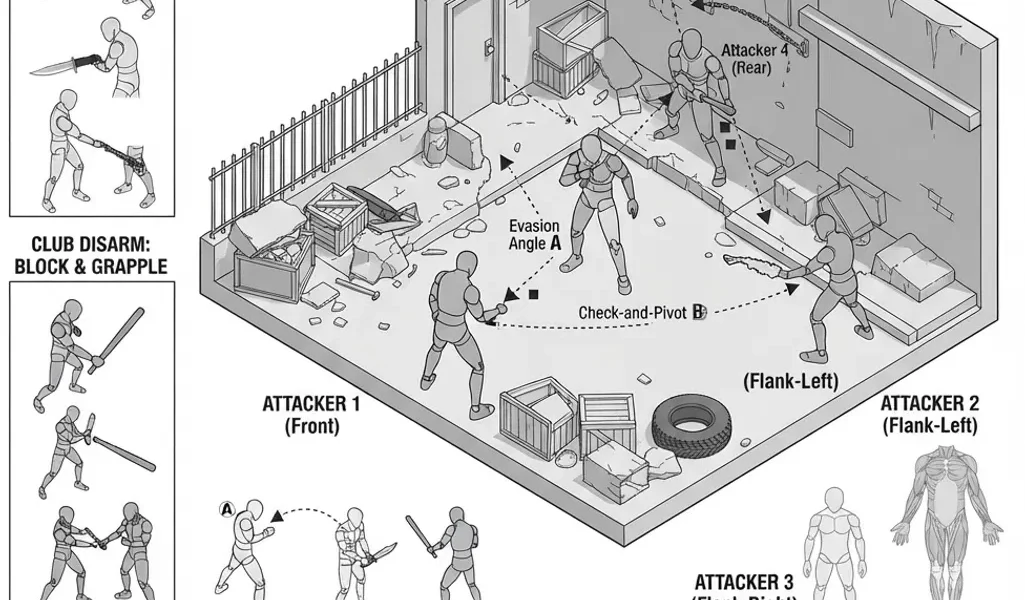
When it comes to tactical self defense miami, preparation is everything.
Ever watch a teenager stare into a glowing rectangle for six hours straight while the real world unfolds right around them? Let’s skip the pleasantries and get straight to the point: most kids today are completely detached from physical reality. They live behind glass, consuming curated social media feeds, chasing artificial dopamine hits, and absorbing online drama. But when they step out into the real world, they face physical risks, peer pressure, bullying, and predatory behavior that no smartphone app can protect them against. That is why practical teen self defense training has evolved from a simple extracurricular activity into an essential life skill for modern adolescents. Rather than spending another afternoon trapped in virtual worlds, teenagers desperately need hands-on, reality-based physical training that builds true survival skills, spatial awareness, emotional toughness, and physical resilience.
The reality gap facing modern teenagers is massive. In previous generations, teenagers spent their free time playing outdoors, navigating physical roughhousing, resolving peer conflicts face-to-face, and naturally developing spatial awareness. Today, sedentary lifestyles and digital saturation have left many adolescents physically clumsy, socially anxious, and unaware of their immediate physical environments. When a real threat emerges—whether it is an aggressive school bully, an unwanted physical advance at a party, or an unexpected threat in a parking lot—a distracted teen is uniquely vulnerable. Investing in quality teen self defense education bridges this gap, giving young adults the physical tools and mental conditioning necessary to navigate an unpredictable world safely.
Why Traditional Martial Arts Fail vs. Modern Teen Self Defense
Traditional martial arts like Karate, Taekwondo, or traditional Kung Fu offer rich history, discipline, and beautiful choreography. However, executing formal forms (katas) while wearing crisp white uniforms does not prepare a young person for a chaotic, real-world confrontation on concrete. Modern teen self defense focuses on reality-based systems—such as Krav Maga, practical combatives, and tactical awareness—that simulate true street violence and realistic threat dynamics.
In a real-life situation, aggressors do not follow formal martial arts rules, weight classes, or choreographed patterns. Street attacks are chaotic, fast, dirty, and often involve multiple attackers or surprise grabs. Practical teen self defense strips away ineffective sport techniques and theatrical flips. Instead, it teaches teenagers how to recognize danger signs, establish clear verbal boundaries, de-escalate aggressive behavior, and—if physical violence becomes unavoidable—strike vulnerable targets fast and hard to facilitate an immediate escape.

The Core Benefits of Reality-Based Teen Self Defense
While the primary objective of physical defensive training is safety, the holistic benefits of reality-based combatives extend far beyond physical fights. Teenagers who undergo structured tactical training experience a profound mental, physical, and emotional transformation that impacts every facet of their daily lives.
1. Building Unshakeable Self-Confidence
Social media builds fragile, shallow egos based on likes, comments, and digital validation. True self-confidence, however, is forged by overcoming real physical adversity, pushing through fatigue, and mastering actionable life-saving skills. Through rigorous teen self defense drills, adolescents discover their true physical limits and learn how to project an aura of assertiveness. Attackers typically seek out easy, insecure targets who walk with slumped shoulders and avoid eye contact. A teenager who projects authentic physical confidence deters potential aggressors before a conflict ever escalates into violence. To complement defensive training with functional physical conditioning, explore our detailed Krav Maga training guide.
2. Mastering Acute Situational Awareness
Walk through any shopping mall or high school campus, and you will see dozens of teenagers walking with their heads bowed down toward glowing screens, often wearing noise-canceling headphones. This complete lack of environmental awareness makes them prime targets for criminals and predators. Reality-based training forces teenagers to break this dangerous habit. Students learn to scan environments continuously, identify exit routes, recognize pre-threat indicators, and evaluate potential hazards. By combining practical combat drills with structured situational awareness guides, teens develop a permanent spatial radar that protects them in public spaces, parking garages, and unfamiliar settings.
3. Overcoming the Paralytic Freeze Response
When faced with sudden violence or extreme stress, the human nervous system undergoes intense physiological changes, triggering fight, flight, or freeze responses. Untrained individuals almost universally freeze, becoming completely paralyzed by fear and panic. Comprehensive teen self defense conditions teenagers to manage adrenaline spikes by exposing them to controlled, scenario-based stress drills. By repeatedly practicing defense techniques against full-contact padded instructors in realistic environments, teenagers program their muscle memory to bypass fear and take decisive, defensive action when every second counts. To understand more about the biomechanics and psychology of reality-based fighting, read about modern reality-based self-defense systems.
Key Skills Taught in Comprehensive Teen Self Defense Classes
A dedicated, high-quality teen self defense curriculum skips sport point-sparring and focuses on effective survival tactics tailored to real-world threats encountered by youth:
- Boundary Setting and Verbal De-escalation: Teaching teens how to use authoritative vocal commands, posture, and non-confrontational body language to stop harassment before it turns physical.
- Escaping Common Attacks: Releasing wrist grabs, hair pulls, shirt grabs, bear hugs, and rear chokes commonly encountered in school grounds or social gatherings.
- Ground Defense and Survival: Learning how to fall safely without injury, protect vital organs, kick from the ground, and quickly stand back up when pinned on concrete.
- Defense Against Larger Aggressors: Leveraging biomechanics, leverage, and strikes to soft-tissue targets (eyes, throat, groin) to overcome size and strength disadvantages.
- Anti-Abduction and Escape Tactics: Equipping teens with specialized tactics to escape attempted kidnappings, vehicle abductions, or forced movement into secluded areas.
How Teen Self Defense Prepares Youth for College and Adulthood
As teenagers grow older, gain independence, get their driver’s licenses, attend social parties, and prepare to move away for college, parental oversight naturally diminishes. Parents cannot monitor their children 24 hours a day. Enrolling your high schooler in teen self defense gives young adults the autonomy and self-reliance to protect themselves when authority figures are not around.
Moreover, the mental discipline forged in reality-based self-defense classes spills over into academic and personal domains. Teenagers involved in physical teen self defense demonstrate enhanced focus, superior emotional regulation under exam stress, and stronger moral backbones when resisting negative peer pressure, substance abuse, or toxic relationships.
Choosing the Right Teen Self Defense Academy
Not all martial arts schools deliver high-caliber instruction. When looking for a local training facility, avoid traditional McDojos that hand out belts for monthly fees or focus solely on point-scoring tournaments. Look for programs that specialize in authentic teen self defense with these core characteristics:
- Pressure-Tested Scenarios: Techniques must be tested under realistic speed, resistance, and stress to ensure they function under real-world conditions.
- Street-Attire Training: Occasional training in everyday clothing (jeans, jackets, sneakers) rather than spotless martial arts gis to simulate real life.
- Legal and Ethical Instruction: Lessons on the legal boundaries of self-defense, reasonable force, and the moral responsibilities of martial competence.
- Experienced Instructors: Trainers who understand both high-level tactical self-defense and the psychological nuances of modern teenage development.
Final Thoughts: Replace Screen
Compare our training: Combatives vs MMA | CQC vs BJJ
FAQ
Q: What does tactical self defense miami entail?
A: It is real-world survival training and stress inoculation.
Q: How does this differ from sport MMA?
A: We focus on practical combatives rather than ring rules.
Q: Why choose this over BJJ?
A: Our focus is strictly on real world CQC and multi-threat scenarios.