Street Fight Defense Training 101: How to Spot Threats Before Your Hands Ever Have to Move
July 29, 2026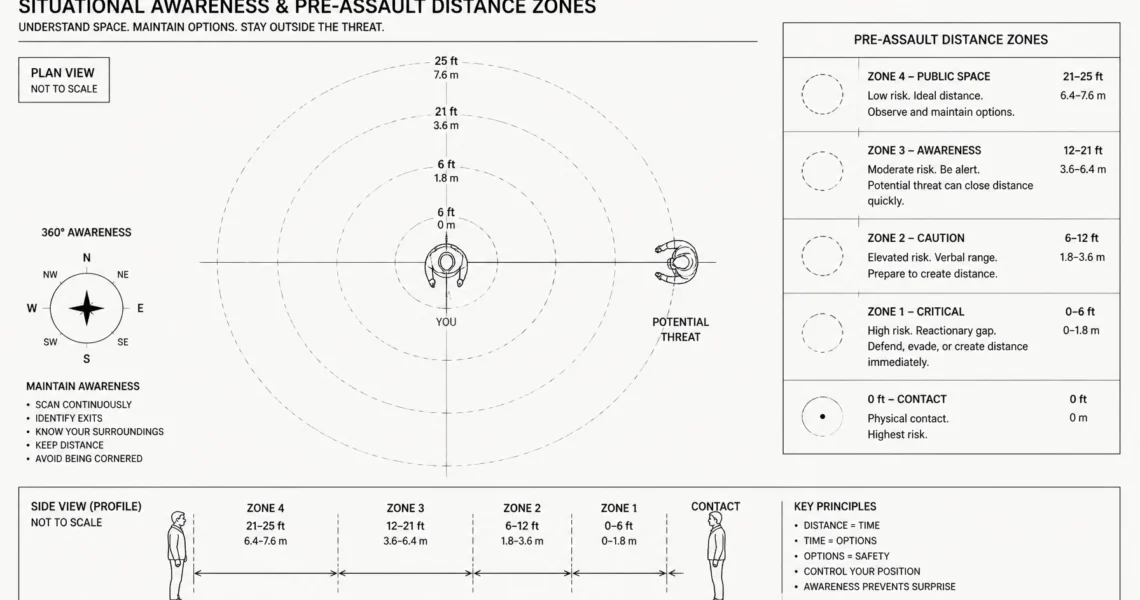
When it comes to tactical self defense miami, preparation is everything.
Ever wonder why so many tough guys get blindsided in a parking lot while staring straight ahead like idiots? Let’s be honest about real-world combat scenarios. Most martial arts dojos teach you how to throw a spinning back kick or lock up a triangle choke after you are already trading blows. But true street fight defense isn’t about what happens during the brawl; it is about keeping your hands in your pockets because you spotted the threat three minutes before it ever launched. If your survival strategy relies entirely on physical combat, you have already lost half the battle. High-level street fight defense begins long before anyone throws a punch.
In real life, violence rarely happens out of nowhere. It brews in subtle behavioral shifts, body language cues, and environmental changes. Whether you are navigating crowded urban streets, walking to your car at night, or dealing with an unpredictable violent actor, learning to recognize these pre-threat indicators will elevate your personal safety far more than years of sparring in a controlled gym setting. This guide breaks down the core principles of situational awareness, threat assessment, and pre-contact indicators so you can protect yourself without ever needing to throw a strike.

Why Traditional Martial Arts Fail in Real Street Fight Defense
Traditional martial arts and combat sports are built on rules, weight classes, clear start times, and single opponents. You stand in a well-lit ring, tap gloves, and wait for a referee to signal the start of a match. Real violence has none of these luxuries. On the street, there are no referees, no weight classes, and no fair fights. Aggressors pick targets they believe are weak, distracted, or easily overwhelmed.
Investing in solid street fight defense training requires shifting your mindset away from athletic competition and toward self-preservation. When an attacker decides to strike, they utilize surprise, aggressive momentum, and often weapon force or multiple attackers. If your primary self-defense plan relies on reacting after you get hit in the jaw, you are playing a losing game. True self-preservation focuses on threat avoidance, de-escalation, and tactical positioning before violence erupts.
Mastering Street Fight Defense Through Situational Awareness
The single most powerful weapon in your arsenal is target hardiness through total spatial perception. Modern life has conditioned people to stare down at smartphones, wear noise-canceling headphones, and wander mindlessly through public spaces. Attackers look specifically for these soft targets because distraction lowers the victim’s reaction time to zero.
To establish effective situational awareness, professional security experts utilize Cooper’s Color Code, a psychological spectrum that categorizes your level of alertness:
- Condition White (Unaware): You are completely oblivious to your surroundings. You are looking at your phone, zoned out, or absorbed in thought. You are an ideal target for violent predators.
- Condition Yellow (Relaxed Awareness): You are calm, relaxed, but continuously scanning your environment. There is no specific threat present, but you are aware of people, exits, and spatial dynamics. This should be your default state in public.
- Condition Orange (Specific Alert): You have identified a potential anomaly or threat actor—for instance, someone staring at you inappropriately or aggressively closing distance. Your focus shifts entirely to evaluating and preparing a counter-strategy.
- Condition Red (Action): The threat is real and immediate. You execute your defensive maneuver, whether that means tactical retreat, verbal de-escalation, or aggressive physical force.
By keeping your mindset firmly in Condition Yellow, the foundational pillar of street fight defense is continuously maintained. You actively deny potential attackers the element of surprise, which is often enough to make them seek an easier target elsewhere. For a deeper understanding of tactical perception, explore the documented frameworks of situational awareness protocols used by law enforcement and tactical units worldwide.
Pre-Attack Indicators Every Street Fight Defense Student Must Know
Violent attacks are almost always preceded by visible bodily and behavioral signals known as pre-attack indicators. Humans are hardwired to display certain involuntary physiological responses when preparing to exert physical aggression. In realistic street fight defense, learning to read these cues allows you to anticipate violence seconds before it manifests physical danger.
1. Target Glance and Environment Scanning
Before an aggressor launches an attack, they instinctively check their environment. They look around to see if witnesses, police officers, or cameras are nearby. Additionally, they will repeatedly look at specific target zones on your body—such as your chin or sternum—or scan your hands to evaluate what you are holding. If a hostile individual looks back and forth between you and their surroundings, they are calculating the risks of an imminent attack.
2. The “Target Stance” or Staggered Footwork
An untrained attacker preparing to strike will almost always drop their dominant foot back to load up power for a heavy punch. This subtle change in stance lowers their center of gravity and stabilizes their posture. If someone engaged in a verbal conflict suddenly bladed their shoulders and shifted their feet into an athletic posture, aggressive physical action is usually moments away.
3. Hands in Pockets or Concealed Movements
Never ignore the hands. Hands deliver strikes, push, pull, grab, and conceal deadly weapons. If someone approaches you aggressively with their hands hidden behind their back or buried inside their pockets, you must treat the situation as an immediate high-risk event. In functional street fight defense, any unidentified hand must be treated as a potentially armed threat.
4. Grooming Touches and Unconscious Habits
High-stress situational anxiety triggers adrenaline, which leads to involuntary nervous behaviors. Attackers carrying hidden weapons will frequently perform “grooming touches”—briefly touching their waistband, pocket, or jacket to ensure their weapon hasn’t shifted. Furthermore, individuals bracing for physical combat often touch their face, scratch their neck, slick back their hair, or clench and unclench their fists violently.
Understanding these subtle physical cues elevates your street fight defense strategy from simple guessing to calculated anticipation. When you notice two or three of these indicators stacking simultaneously, the threat is no longer theoretical; it is actively developing.
Managing Distance and the Fence Technique
When an aggressive actor singles you out, maintaining distance is your primary non-violent shield. The golden rule of real-world self-preservation is simple: keep at least two arm-lengths of distance between yourself and an unknown person. If an aggressor can reach out and touch you, you have surrendered your primary defensive buffer.
A core concept taught in street fight defense is boundary management through “The Fence.” Pioneered by tactical instructors, the Fence involves raising your hands naturally in front of your chest with palms open facing outward toward the aggressor. This posture serves several critical functions simultaneously:
- It visually communicates non-aggression to onlookers and potential witnesses while creating a physical boundary.
- It keeps your hands positioned near your face, ready to block, deflect, or strike instantly if necessary.
- It provides a physical measuring tool—if the aggressor steps past your fingertips, they have breached your safety zone and confirmed hostile intent.
If you want to build practical combat conditioning alongside these tactical distance management techniques, explore our complete real-world self-defense programs designed to handle high-stress self-defense scenarios.
Decisive Action: De-escalation vs. Tactical Retreat
Unlike combat sports, functional street fight defense teaches that avoiding a physical confrontation entirely is the ultimate victory. Ego is your worst enemy in a self-defense situation. Winning an argument on the street provides zero value, but losing a physical fight can result in severe injury, legal complications, or death.
When confronted by a potential threat, utilize clear, direct, non-confrontational communication. Use a firm tone without sounding overtly hostile or fearful:
“Back up, man. I don’t want any trouble.”
This statement accomplishes two key goals: it sets an unambiguous boundary for the threat actor, and it establishes clearly to surrounding witnesses that you are attempting to avoid physical conflict. If verbal de-escalation fails and the aggressor continues advancing into your safety zone, your options compress down to two choices: escape immediately if an exit route exists, or execute decisive physical defensive actions to neutralize the threat and secure your escape.
Building a Mindset for Tactical Street Fight Defense
When you train street fight defense in Miami or anywhere else where real-world conflict can erupt instantly, physical technique is useless without the proper mental conditioning. The psychological component of street fight defense involves accepting that violent conflict is fast, chaotic, and dangerous. In a real encounter, you will experience an extreme surge of adrenaline, elevated heart rate, loss of fine motor skills, and tunnel vision.
To overcome these physical reactions under extreme stress, incorporate dynamic scenario training into your routine. Practice recognizing pre-threat cues, moving into advantageous positioning, setting your boundaries, and making fast tactical decisions under pressure. If you are ready to stop relying on luck and want to develop bulletproof self-defense skills, train with our Miami team to master raw, unedited practical defense methods.
Final Thoughts: Prevention is Supreme Mastery
Mastering street fight defense means controlling the fight before a punch is ever thrown. Throwing hands on the street is unpredictable and fraught with danger. By mastering situational awareness, recognizing pre-attack indicators, maintaining distance, and controlling your ego, you become a difficult target for predators.
Keep your head up, stay aware of your surroundings, trust your instincts when something feels wrong, and train your mind and body to react decisively when danger approaches. True safety isn’t found in physical violence—it is built on preparation, perception, and avoidance.
Compare our training: Combatives vs MMA | CQC vs BJJ
FAQ
Q: What does tactical self defense miami entail?
A: It is real-world survival training and stress inoculation.
Q: How does this differ from sport MMA?
A: We focus on practical combatives rather than ring rules.
Q: Why choose this over BJJ?
A: Our focus is strictly on real world CQC and multi-threat scenarios.