The 30-Second Self-Defense Check: 5 Situational Awareness Habits That Keep You Off the News
July 29, 2026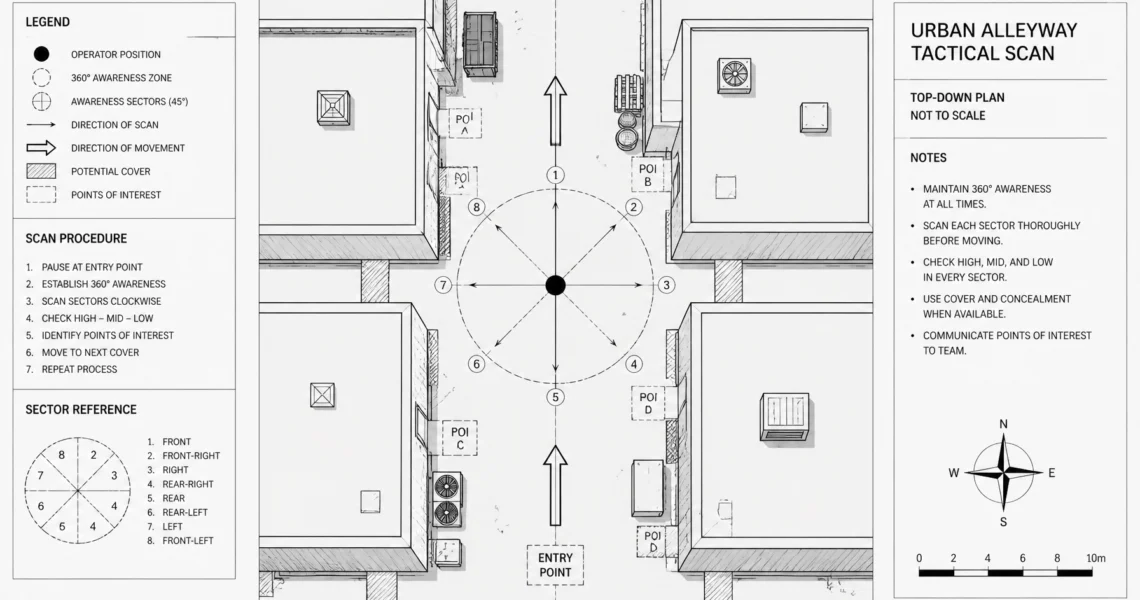
When it comes to tactical self defense miami, preparation is everything.
The 30-Second Self-Defense Check: 5 Situational Awareness Habits That Keep You Off the News
Ever wonder why most people walk around like blindfolded targets waiting for lightning to strike? In a fast-paced world filled with smartphone screens, ambient city noise, and constant multitasking, human attention has become dangerously fragmented. Violence, however, rarely occurs in a complete vacuum. Long before a fist is thrown or a concealed blade is drawn, a distinct sequence of physical and behavioral markers takes place. Developing reliable situational awareness habits serves as your primary line of defense, allowing you to spot these subtle pre-assault indicators long before a situation escalates into a emergency.
Tactical awareness in bustling environments like Miami, Chicago, or New York is not about living in a constant state of fear or clinical paranoia. Instead, it is about implementing a structured, repeatable system of observation. By practicing a rapid 30-second self-defense check whenever you enter a new environment, you train your brain to filter out ambient noise and rapidly identify potential threats before they materialize.
5 Essential Situational Awareness Habits for Personal Protection
Most personal security breakdowns do not happen because a victim lacked physical fight training or defensive tools. Rather, they happen because the person ran out of time. Action is inherently faster than reaction. If an aggressive predator initiates an ambush while your attention is fully absorbed in a text message, your martial arts skills or tactical gear will offer minimal help. By incorporating disciplined situational awareness habits into your daily lifestyle, you extend your reaction buffer and gain critical time to make life-saving decisions.

1. Conduct the 30-Second Entry Sweep
The moment you cross a threshold into a new environment—whether walking into a gas station, stepping into an elevator, or entering a restaurant—pause for a 30-second diagnostic sweep. Rather than immediately looking for a seat or pulling out your phone, perform a structured visual sweep of the space:
- Identify Exits: Always locate at least two potential escape routes, including primary doors and secondary emergency exits through kitchens or back corridors.
- Locate Cover and Concealment: Spot high-density structures like concrete pillars, solid counters, or heavy dividers that can offer ballistic protection or physical barriers during a crisis.
- Identify Anomalies: Look for individuals displaying unusual behavior, such as targeted staring, inappropriate heavy clothing during warm weather, or pacing without a clear purpose.
Establishing these active situational awareness habits right as you arrive neutralizes the element of surprise and provides an immediate spatial map of safety options.
2. Focus on Hands and Pre-Assault Indicators
In physical conflict, the hands carry the danger. Hands hold weapons, throw strikes, grab clothing, and initiate contact. When evaluating potential hazards in public spaces, your eyes should automatically prioritize observing human hands over facial features.
Key behavioral indicators of pre-assault body language include:
- Concealed or Hidden Hands: Keeping hands deeply buried in oversized pockets or hidden behind the back when approaching strangers.
- The “Security Touch”: A subconscious, physical touch to the waistband or pocket area to check that a hidden weapon is still secure during movement.
- Target Glancing: Looking repeatedly at specific areas of your body (like your pockets, purse, or neck) or checking surroundings to see if witnesses are present.
- Clenched Fists and Bladed Stance: Shifting weight onto the back foot while tightening hands into fists in preparation for explosive movement.
Consistently executing these critical situational awareness habits helps your peripheral vision pick up hidden aggression long before an assault unfolds.
3. Secure Transition Zones and Spatial Positioning
Predators favor transition zones—spaces where people shift from one environment to another, such as parking lots, stairwells, ATM alcoves, and doorways. In these locations, individuals are usually mentally focused on their destination rather than their immediate surroundings, making them vulnerable targets.
To guard yourself against ambush tactics in transition zones, maintain tactical positioning by keeping a minimum standoff distance of six to eight feet from unknown individuals whenever possible. Hugging corners closely when walking around blind building edges drastically reduces your reaction time if someone is waiting on the other side. Instead, take wide turns around corners to keep your field of view open. To discover more about cultivating a proactive defensive mindset, read our comprehensive guide on tactical mindset training.
4. Eliminate Digital Blindness
Smartphones, smartwatches, and noise-canceling earbuds are among the primary causes of situational vulnerability in contemporary society. Looking down at a screen drops your field of vision down to your feet, eliminating your peripheral sight and sending an explicit message to opportunistic predators that you are unaware and unprepared.
If you must check directions, answer an urgent message, or make a call while in public, follow these basic steps:
- Back up against a solid wall or structure so your rear angle is entirely protected.
- Hold your device up at chest or eye level so your peripheral vision remains active.
- Perform a quick 360-degree scan every 10 to 15 seconds to ensure nobody is closing the distance on you.
Modifying your daily interactions with technology through practical situational awareness habits allows you to stay connected without compromising your personal safety.
5. Apply the OODA Loop to Instant Decision-Making
The OODA Loop—which stands for Observe, Orient, Decide, Act—is a operational decision cycle originally developed by military strategist Colonel John Boyd. You can learn more about how cognitive strategy applies to real-world threats by studying the OODA loop framework on Wikipedia.
When an unexpected crisis occurs, a human brain that is completely unprepared experiences freeze or lag while trying to comprehend what is happening. However, when you integrate proactive situational awareness habits into your baseline thinking, your brain constantly processes subtle information. If a threat materializes, you skip past shock and immediately execute an effective response strategy.
Understanding Baseline vs. Anomaly Detection
To master high-level observation, you must master the concept of environmental baselines. Every public venue—a quiet coffee shop, a busy train station, or a quiet residential neighborhood—possesses a specific operational rhythm. This baseline consists of standard sound patterns, movement flows, and typical social interactions.
An anomaly is anything that strays from that established pattern. For example, in a busy airport, people rushing toward gates with luggage represent baseline activity. Conversely, an individual standing motionless beside a baggage carousel without luggage, continuously watching the hands and pockets of surrounding travelers, constitutes a clear anomaly. Strengthening your daily situational awareness habits tunes your mind to instantly detect anomalies without getting overwhelmed by ambient background noise.
Cooper’s Color Code: Managing Mental Readiness
To practice effective threat detection without suffering from mental fatigue, security experts rely on Cooper’s Color Code. This framework breaks cognitive awareness down into four distinct levels:
- Condition White: Completely unaware and unalert. Your mind is elsewhere, head buried in your phone or distracted. Highly vulnerable to surprise attack.
- Condition Yellow: Relaxed, general awareness. There is no specific threat present, but your senses are open, scanning surroundings, and assessing baselines.
- Condition Orange: Specific alert. You have identified a clear anomaly or potential threat and are actively monitoring it while formulating contingency plans.
- Condition Red: Defensive action state. A threat is verified, and you are executing your defense, escape, or mitigation response.
Your goal should always be to live in Condition Yellow whenever you leave your home. Exercising consistent situational awareness habits keeps you comfortably in Condition Yellow, preventing panic while providing maximum response speed.
Daily Training Drills to Sharpen Your Skills
Situational awareness is a mental muscle that requires intentional daily conditioning. You can build sharp habits by engaging in simple, gamified exercises during your routine activities:
- The 5-10-15 Observation Game: Upon entering a room, look around for ten seconds, close your eyes, and mentally list five details about the exit locations, ten details about the environment, and fifteen characteristics of people nearby.
- Spot the Anomaly: While sitting in a park or restaurant, challenge yourself to spot three distinct behavioral anomalies within five minutes.
- Pre-Assault Scanning Drill: Look at groups of people in public transit or shopping centers and practice immediately scanning their hands and waistbands before glancing at their faces.
Over time, these conscious exercises transform into effortless, subconscious subroutines. To learn more about integrating personal security drills into your routine, check out our core insights on self-defense fundamentals.
Conclusion: Awareness Is Your Primary Layer of Defense
Personal defense is not solely about physical combat capacity; it is fundamentally about threat avoidance and early identification. By applying the 30-second self-defense check whenever you transition between spaces and solidifying your daily situational awareness habits, you dramatically reduce your chance of becoming a target for aggressive crime. Cultivate these awareness routines today, stay alert to your environment, and ensure you remain in complete control of your personal security.
Compare our training: Combatives vs MMA | CQC vs BJJ
FAQ
Q: What does tactical self defense miami entail?
A: It is real-world survival training and stress inoculation.
Q: How does this differ from sport MMA?
A: We focus on practical combatives rather than ring rules.
Q: Why choose this over BJJ?
A: Our focus is strictly on real world CQC and multi-threat scenarios.