If Someone Grabs Your Child: What Every Kid Must Know Before You Can Help
October 14, 2026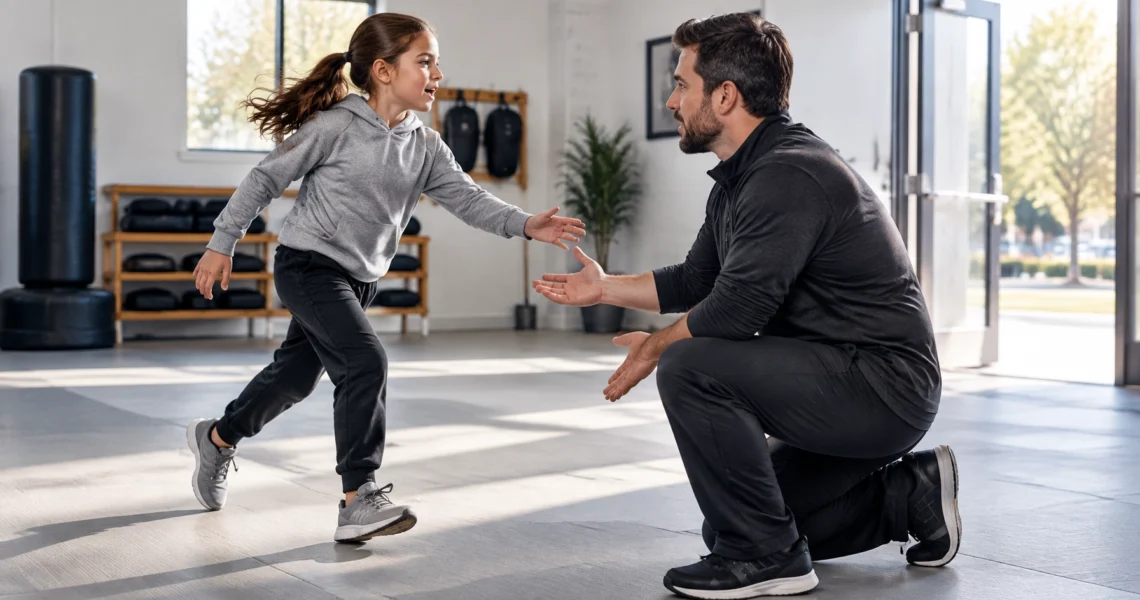
What should your child do if someone grabs them before you can get there?
Teach them to make noise, get difficult to move, and run toward safety. The goal isn’t to win a fight. It’s to create a window to escape.
Teach the child, not just the parent
In our post Fighting Back When Your Kids Are With You: Protecting a Family in Public, we covered the parent’s side of a dangerous moment. This is the other half: what your child can do while you’re still trying to reach them.
Start with one clear message: you are allowed to be loud, rude, and physical to get away from someone who is taking or hurting you. Your child doesn’t have to protect an adult’s feelings or worry about making a scene. They should use their voice, move toward safety, and get help.
Keep it simple enough to remember under stress. A child in a frightening situation won’t recall a long lecture. They may recall a short phrase you practiced together.
Make noise people can understand
Teach your child to yell clearly and loudly:
“I don’t know you! This is not my parent! Help!”
If the person is someone your child does know, they can say what’s happening instead: “Let go of me! I need help!” The point is to get attention and make the situation unmistakable to nearby adults.
Practice the words at different volumes, without turning the drill into a scare session. A child who has only ever been told to “use their inside voice” may need permission to break that rule when they’re in danger. Tell them plainly: this is one of the times when shouting is exactly right.

If someone grabs them, get low and go
If a person grabs or tries to carry your child, teach them to resist being moved long enough to get attention and find a chance to escape. A simple response to practice is:
- Yell. Use a clear phrase that tells people this is not a normal parent-child moment.
- Drop their weight. Bend their knees and get low so they’re harder to lift or carry.
- Move toward an opening. Pull away, turn, or run when there’s a safe chance.
- Go to people. Head for a staffed business, a security guard, a teacher, a police officer, or another trusted adult in a public place.
This isn’t a lesson in fighting. The objective is to break contact, get attention, and get to safety, not to stay and trade blows. The exact response will depend on the situation, and no single action can guarantee an outcome. Practice gives a child options to reach for; it doesn’t make danger predictable.
The National Center for Missing & Exploited Children’s analysis is often summarized with an “83%” figure. The important detail: about 83% of the children in its review who escaped an attempted abduction took some proactive action. That does not mean 83% of all children targeted escaped, and it is not a promise that resistance will work. It does reinforce why kids should know they’re allowed to yell, move, pull away, and seek help.
Replace “stranger danger” with behavior signs
“Never talk to strangers” sounds simple, but it misses the real problem: danger doesn’t always come from someone unfamiliar. A child may know the person who is pressuring, threatening, grooming, or trying to take them. And a child who is lost may need to ask a safe adult for help.
Instead, teach behavior-based warning signs. Pay attention if someone:
- Asks a child to keep a secret from their parent or caregiver.
- Tries to get them alone or away from a familiar adult.
- Says there’s an emergency and tells them to come along without checking.
- Offers a ride, gift, or treat in exchange for going somewhere.
- Ignores a child’s “no,” makes them uncomfortable, or pressures them to break a family rule.
The Office of Juvenile Justice and Delinquency Prevention explains why “stranger danger” warnings are not enough on their own. Teach the child to notice the behavior and situation, not decide whether someone looks dangerous.

Set a family code word
Choose a code word that’s easy for your child to remember but hard for others to guess. If someone says, “Your mom sent me,” or “Your dad asked me to pick you up,” your child should check the code word before going anywhere with them.
Agree on a few rules:
- Keep the word private. Don’t share it online or with casual acquaintances.
- If the person doesn’t know it, your child stays put and finds a trusted adult.
- If the code word is shared outside the family, change it.
- Make sure caregivers and approved pickup adults know what to do if a child asks to check.
A code word is one tool, not a substitute for a pickup plan. Make sure your child knows who is allowed to collect them, where they should wait, and which adults or staffed places they can go to if something feels wrong. The NCMEC KidSmartz program offers additional age-appropriate safety resources for families.
Practice without scaring them
A safety talk matters. A calm, short drill helps make the words and movements easier to recall. Keep practice playful and controlled: tell your child what you’re rehearsing, agree on a stop signal, and never surprise-grab or frighten them.
Try short scenarios:
- The pickup check: A familiar adult says a parent sent them. Your child asks for the code word and checks with their caregiver.
- The unwanted invitation: Someone offers a ride or asks them to come see something. Your child says no, moves away, and tells a trusted adult.
- The grab-and-go response: With the child’s consent and under close supervision, rehearse yelling, dropping low, pulling free from a gentle hold, and moving to a marked safe spot.
- The report: After reaching safety, the child tells a trusted adult what happened. If there is immediate danger, the adult calls 911.

Adjust the drill to your child’s age and comfort. Young children may need simple words and one obvious safe destination. Older children can practice what to do at school, in a parking lot, or when a planned pickup changes. Praise clear decisions and effort, not speed, toughness, or perfect performance.
And make one thing explicit after every practice: if your child is grabbed or threatened, it is never their fault. Their job is to try to get safe and tell a trusted adult. The adult’s job is to protect them and get help.
If there’s a weapon, don’t make it a test of courage
Teach children to put safety ahead of belongings. During an armed threat, the default is to comply with demands and avoid sudden moves; don’t ask a child to challenge someone or attempt a disarm. If they face an immediate threat of death or serious harm with no safer option, they should rely only on a response they have actually practiced to create a chance to escape, not to stay and fight. Keep any such training age-appropriate and led by a qualified instructor.
For ordinary safety planning, the rule stays simple: get away, get to a safe adult, and get help.
Give them a chance to practice
You can’t be beside your child every minute. You can give them clear words, a plan, and practice using both. If your family wants structured, age-appropriate coaching, explore Educated Savages’ teen self-defense training. Free first-class sessions are available Monday, Wednesday, and Friday at 7:00 PM at 55 NE 2nd St, Miami, FL 33132. Private and family sessions are also available.
No drill can guarantee what happens in a real emergency. But a child who knows they’re allowed to yell, resist being carried, move toward people, and ask for help has more than a warning. They have a plan.