Why Traditional Martial Arts Fail in a Street Fight: The Ugly Truth About Dojo Self-Defense
July 29, 2026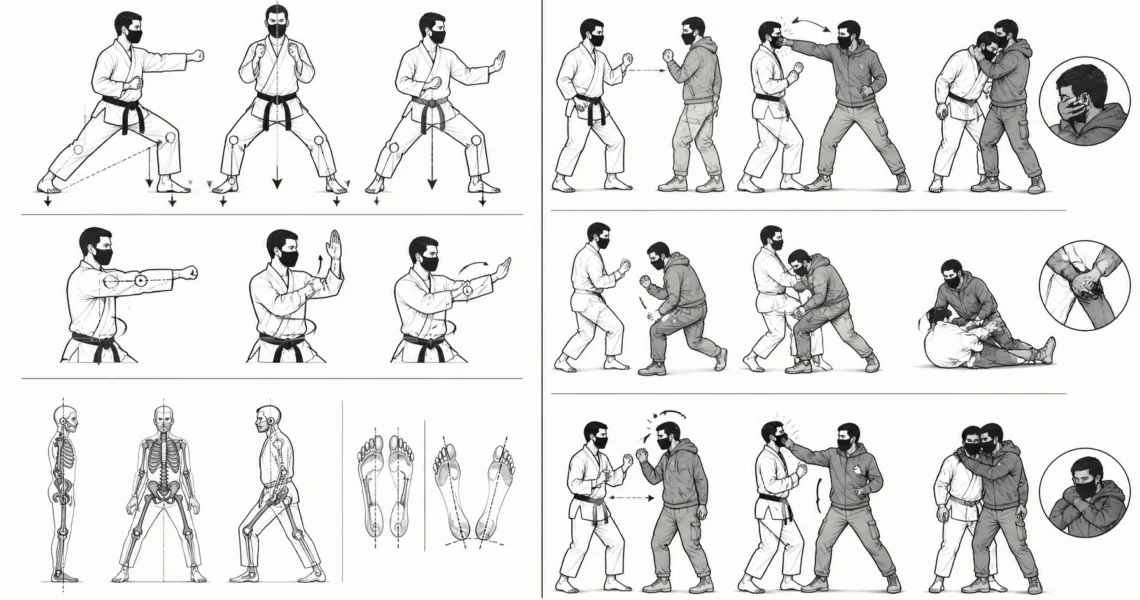
When it comes to tactical self defense miami, preparation is everything.
Ever wonder why spending five years mastering forms in a pristine dojo leaves you completely paralyzed when someone sucker-punches you behind a bar? For decades, strip-mall dojos have sold a dangerous myth: that practicing crisp forms and compliant drills will save your life in a real-world confrontation. The reality is far harsher. Many traditional martial arts fail catastrophically when forced to perform outside controlled environments.
The stark difference between traditional training hall aesthetics and the violent brutality of an unchoreographed attack is vast. In this comprehensive guide, we tear down the dangerous illusions surrounding traditional dojo self-defense, examine why classical training methodologies fall short under real physical threat, and reveal how modern pressure-tested combat systems offer a functional alternative.

The Flaw of Static Choreography in Traditional Martial Arts
To understand why many systems crumble during a street encounter, we must first look at how techniques are historically passed down. A core foundation of many systems involves kata, forms, or pre-arranged step-sparring drills. While these repetitive sequences were originally designed to preserve historical techniques or build general physical conditioning, they often generate deeply ingrained bad habits when relied upon as primary self-defense tools.
Real-world street violence is inherently chaotic, explosive, and asymmetric. Untrained street attackers do not step forward into a deep horse stance, throw a single telegraphed straight punch, and freeze in place waiting for your three-step counter technique. Instead, real attackers ambush you from behind, grab your clothing while wildly swinging vicious hooks with their dominant hand, pull concealed weapons, or attempt to slam you onto hard concrete. Relying heavily on rigid traditional martial arts forms creates a false sense of security that shatters the moment an opponent refuses to follow a script.
The Absence of “Alive Training” and Dynamic Resistance
One of the primary reasons self-defense experts criticize non-contact or low-contact styles is the complete absence of “aliveness.” Originally popularized in combat sports analysis, the concept of alive training relies on three essential criteria: real movement, dynamic timing, and continuous resistance. To gain a deeper understanding of this philosophy, you can explore alive training concepts and how dynamic pressure reshapes functional combat effectiveness.
Unfortunately, standard training routines in classical traditional martial arts frequently neglect fully resistant sparring in favor of cooperative partner drills. When your training partner acts as a compliant dummy—stopping their strike mid-air or falling over at the slightest touch—your brain learns a dangerous falsehood. When faced with an aggressive attacker who actively resists, pushes forward through pain, and hits back with maximum force, practitioners of non-sparring traditional martial arts experience catastrophic cognitive overload.
The Neurological Shock of the Adrenaline Dump
When an unexpected street fight breaks out, your body immediately triggers an intense fight-or-flight sympathetic nervous system response. A massive wave of adrenaline, cortisol, and norepinephrine floods your bloodstream. This biological survival mechanism alters your physical and sensory capacities in several distinct ways:
- Loss of Fine Motor Control: Intricate finger locks, complex wrist manipulations, and high multi-kick combinations become nearly impossible to perform.
- Tunnel Vision and Auditory Exclusion: Your peripheral vision narrows dramatically, and peripheral hearing drops out as your brain hyper-focuses on the threat.
- Cognitive Paralysis: If your brain has never experienced high-arousal stress inoculations during training, it freezes under real physiological panic.
Under intense threat, only simple, gross-motor strikes—such as heavy palm strikes, powerful hammerfists, hard knees, and robust defensive frame positions—remain reliably functional. This physiological reality is where classical traditional martial arts methodologies frequently stumble.
Why Dojo Rulesets Distort Real-World Tactics
Another major reason martial arts practitioners struggle in violent altercations is the unconscious conditioning created by dojo rulesets. In any school, safety guidelines are necessary to keep students healthy. Mats cushion falls, referees step in to break clinches, protective gear reduces impact, and deliberate strikes to vulnerable targets are strictly forbidden.
However, over years of consistent repetition, safety rules turn into dangerous tactical habits. Practitioners of point-sparring traditional martial arts train themselves to pause after landing a single strike, waiting for an instructor or referee to reset the match. On the street, landing a single strike rarely terminates a committed assault. Pausing to assess your work opens a window for an enraged attacker to tackle or unconscious-strike you.
Furthermore, dojo scenarios typically begin with two fighters standing at an agreeable distance, bowing, and voluntarily engaging. Real self-defense rarely starts this way. It starts with pre-assault indicators: aggressive verbal harassment, predatory posturing, spatial invasion, and sneaky distraction sucker-punches. If your background in traditional martial arts omits proactive threat management and verbal de-escalation, you enter every violent situation at a severe tactical disadvantage.
Practical Combatives vs MMA: Bridging the Self-Defense Gap
If ancient styles fail to prepare practitioners for real-world danger, what methodologies actually work when your physical safety is on the line? The debate between traditional styles, combat sports, and practical self-defense is ongoing. You can read our in-depth analysis regarding practical combatives vs MMA to discover how sport fighting systems translate directly to personal survival.
Mixed Martial Arts (MMA) revolutionized martial arts by reintroducing full-contact pressure testing to striking and grappling disciplines. Systems like Brazilian Jiu-Jitsu, Muay Thai, Boxing, and Freestyle Wrestling require practitioners to execute techniques against fully resisting opponents during every session. While MMA remains a sport with specific rules, its practitioners develop superior spatial management, pain tolerance, timing, and structural control compared to non-sparring traditional martial arts practitioners.
However, pure sport fighting still leaves critical blind spots regarding real-world altercations. Modern practical combatives bridge this gap by taking the high-intensity pressure testing of combat sports and combining it with vital street readiness concepts—such as weapon retention, multiple attacker awareness, low-light environmental navigation, and defensive legal considerations. Cultivating an effective urban self-defense mindset ensures you possess both the technical skill to fight and the tactical wisdom to avoid conflict altogether.
Four Dangerous Myths Common in Dojo Culture
To establish functional martial self-defense, we must systematically dismantle four dangerous myths commonly taught in consumer-focused traditional martial arts schools:
- Myth 1: Technique effortlessly overcomes massive physical size differences. While biomechanical leverage is real, physics cannot be ignored. A 230-pound aggressive male will easily overwhelm a smaller practitioner unless that individual possesses explosive functional power, solid grappling defense, and heavy live-sparring experience.
- Myth 2: Eye gouges and groin kicks equalize every conflict. Small, precise targets are exceptionally difficult to hit when a aggressive opponent is moving rapidly. Furthermore, an adrenaline-fueled attacker will frequently absorb a groin strike and continue tackling you to the pavement.
- Myth 3: Intricate bare-hand disarms reliably stop sharp knives. Fantasy knife disarms taught in soft traditional martial arts classes collapse instantly against violent, rapid, multi-directional stabbing attacks. Real knife defense centers around rapid distance creation, sprint escapes, or relentless structural control.
- Myth 4: Ground fighting is irrelevant because of asphalt and multiple attackers. While voluntarily taking a fight to the pavement in a street setting is unwise, over 70% of real physical altercations force participants into a clinch or down onto the floor. Completely ignoring ground grappling leaves you defenseless if knocked off your feet.
How to Modernize Your Self-Defense Training
Does this mean classical traditional martial arts hold zero intrinsic value? Absolutely not. Historical disciplines like Judo, Catch Wrestling, Kyokushin Karate, and traditional Sambo contain highly lethal, bone-breaking techniques when stripped of unnecessary dogma and tested against full resistance.
If you want to ensure your martial arts background functions under actual physical pressure, apply these key adaptations to your training regimen:
- Incorporate Alive Pressure Testing: Request that your training partners provide realistic, unscripted resistance, varying rhythm, and unpredictable aggression during controlled sparring.
- Cross-Train in Functional Combat Sports: Supplement your base system with Boxing for head movement, Wrestling or Judo for clinch stabilization, and BJJ for ground defense.
- Practice Pre-Assault Awareness Drills: Actively train to recognize subtle pre-assault indicators, such as target glance behaviors, hand hiding, shifting weight, and aggressive verbal distraction tactics.
- Prioritize Gross-Motor Combatives: Build your core tactical system around powerful palm heels, hard elbow strikes, devastating low leg kicks, and simple frame-and-escape movements.
Final Thoughts on Traditional Martial Arts in Modern Self-Defense
Exposing the flaws inherent in non-resistant traditional martial arts is not about disrespecting history, art forms, or ancient heritage; it is fundamentally about personal safety and survival. When sudden violence erupts, aesthetic movements, uniform colors, and belt ranks offer zero physical protection. Survival demands adaptable movement, physical resilience, mental toughness, and brutal honesty in training.
By stripping away outdated dogmas and embracing dynamic, pressure-tested training systems, you convert theoretical knowledge into true practical capability. Do not let dojo comfort compromise your safety in the real world—train with intent, pressure-test every technique, and always prepare for reality.
Compare our training: Combatives vs MMA | CQC vs BJJ
FAQ
Q: What does tactical self defense miami entail?
A: It is real-world survival training and stress inoculation.
Q: How does this differ from sport MMA?
A: We focus on practical combatives rather than ring rules.
Q: Why choose this over BJJ?
A: Our focus is strictly on real world CQC and multi-threat scenarios.