How to Defend Yourself in a Street Fight: The Reality-Based Approach to Surviving Violence
July 30, 2026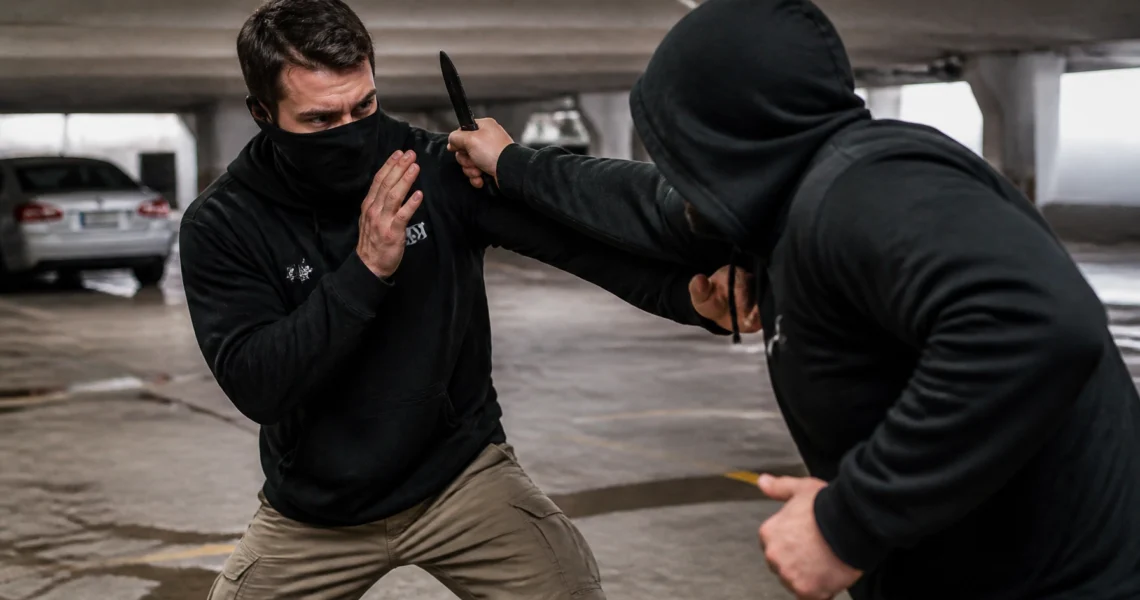
When it comes to tactical self defense miami, preparation is everything.
What would you actually do if someone blindsided you in a dark parking lot right now? Most people freeze. They expect a referee, a set of gloves, or someone to step in and stop the clock. But real violence does not give a damn about your rules, your belt ranking, or your feelings. When an aggressive stranger corners you, mastering practical street fight defense is the only thing standing between you and severe physical trauma. In street altercations, there are no weight classes, no rounds, and no fair play.
In the real world, an attacker will not wait for you to touch gloves, nor will they fight clean. That is why traditional martial arts training often fails on the concrete—it prepares you for a structured duel, whereas understanding realistic street fight defense requires a radical shift toward survival-oriented, reality-based tactics. In this comprehensive guide, we will break down the essential components of real-world self-defense: situational awareness, psychological conditioning, de-escalation tactics, brutal physical efficiency, and the legal aftermath of surviving an attack.
Why Effective Street Fight Defense Differs From Combat Sports
To understand personal safety, you must first unlearn the cinematic and athletic myths surrounding violence. Combat sports like Brazilian Jiu-Jitsu, Boxing, Muay Thai, and Mixed Martial Arts (MMA) are incredible for physical fitness, timing, and toughness. However, they operate within a framework of rules designed to protect athletes from permanent injury or death. When discussing real-world street fight defense, those rules disappear completely.
Consider the fundamental differences between a ring fight and a street encounter:
- Multiple Attackers: In the ring, you face one opponent. On the street, violent individuals frequently travel in groups. Taking a fight to the ground in a real-world scenario exposes you to head kicks from your attacker’s associates.
- Weapons: You cannot assume an aggressor is unarmed. Knives, brass knuckles, improvised impact weapons, and firearms drastically alter the dynamics of defense.
- Environmental Hazards: Concrete surfaces, glass, broken curbs, moving traffic, and low lighting create massive environmental dangers that do not exist on padded mats.
- No Weight Classes: A 140-pound individual might be forced to defend against a 230-pound attacker driven by rage or chemical substances.
Because of these factors, a critical concept in street fight defense is avoiding prolonged physical struggle. The goal is never to “win” a fight or force a submission; the sole objective is to escape safely and return home alive. For a deeper understanding of legal boundaries and physiological safety, you can review Wikipedia’s comprehensive overview of self-defense.
Phase 1: Pre-Contact Tactics and Situational Awareness
The absolute best street fight is the one you never participate in. Long before fists are thrown or weapons are drawn, violence usually broadcasts itself. Developing keen environmental awareness serves as your primary pillar of street fight defense.
1. Condition Yellow: The Mindset of Preparedness
The late Colonel Jeff Cooper defined the Cooper Color Code as a way to measure situational awareness. Most civilians walk around in Condition White—completely unaware of their surroundings, distracted by smartphones, headphones, or internal dialogue. To protect yourself, you must live in Condition Yellow: relaxed awareness.
In Condition Yellow, you are not paranoid; you are simply observing your surroundings. You notice exit routes in restaurants, observe people’s hands when they approach you, and recognize potential choke points in dark parking structures. By expanding your radar, you deny attackers the element of surprise, which is their single greatest advantage.
To deepen your understanding of environmental threat assessment, check out our guide on situational awareness tactics to sharpen your mental radar before trouble begins.
2. Managing the Distance (The Tactical Fence)
When an aggressive individual approaches you making verbal threats, they are attempting to close the distance to launch a surprise attack. Maintaining spatial management is crucial for enhancing your overall street fight defense strategy.
Adopt a position known as “The Fence.” Keep your hands up near your chest level, palms facing outward in a non-aggressive, placating gesture. This stance accomplishes three vital tasks simultaneously:
- It communicates a desire to de-escalate to onlookers and potential witnesses.
- It creates a physical barrier that keeps the attacker outside of strike range.
- It pre-positions your hands near your face to instantly block strikes or deliver soft-tissue counterattacks if physical violence becomes unavoidable.

Phase 2: Physical Engagement and Target Selection
When de-escalation fails and an attacker breaches your safety perimeter, you must transition instantly from non-violent boundary setting to overwhelming, explosive counter-violence. When physical street fight defense becomes inevitable, hesitation is dangerous.
Targeting High-Value Soft Tissues
In a combat sport, punching someone in the jaw or forehead is common. On the street, punching a solid human skull with bare knuckles often results in broken bones in your hand (the “boxer’s fracture”), rendering your primary weapon useless. Instead, effective defensive striking focuses on high-impact soft targets that bypass physical muscle mass and size disparities:
- The Eyes: Eye gouges, rakes, or palm strikes to the face disrupt sight, trigger automatic physiological reflex responses, and create immediate space to run.
- The Throat: Strikes directed at the windpipe or throat area cause involuntary coughing, severe respiratory distress, and panic, neutralizing an attacker’s offensive momentum instantly.
- The Groin and Knee Joints: Low kicks aimed at the knees can hyper-extend joints and disable an attacker’s mobility, making pursuit impossible.
- The Ear canal: Cupped-palm strikes to the ears can rupture eardrums, causing intense pain, disorientation, and loss of balance.
Remember, gross motor skills are the foundation of physical street fight defense. Under extreme stress, complex fine motor skill combinations breakdown due to massive adrenaline dump. Rely on hard, simple movements: palm-heel strikes, hammer-fists, knee drives, and elbow strikes.
Phase 3: Managing the Adrenaline Dump and Fight-or-Flight Response
When faced with immediate physical threat, your sympathetic nervous system fires instantly. Your heart rate skyrockets, peripheral vision narrows (tunnel vision), auditory exclusion kicks in, and fine motor dexterity plummets. Understanding adrenaline management is crucial for street fight defense because unmanaged fear leads directly to freezing.
To counter the freezing response during a crisis, train yourself in tactical breathing (inbox breathing). Inhale deeply through your nose for four seconds, hold for four seconds, exhale through your mouth for four seconds, and hold for four seconds. This simple physical action regulates your nervous system, restores oxygen to the brain, and allows you to make rapid tactical decisions under pressure.
Developing psychological resilience requires deliberate preparation. Read our detailed analysis on mindset conditioning for high-stress situations to build an unshakeable tactical foundation.
Post-Conflict Protocol in Street Fight Defense
Surviving the physical altercation is only half the battle. What you do immediately following an encounter dictates whether you stay safe, survive medical emergencies, and avoid severe legal repercussions. A complete strategy for street fight defense must cover the critical post-conflict phase.
- Scan and Disengage: The moment the immediate threat is neutralized or knocked back, do not stand over them or gloat. Instantly scan 360 degrees for additional attackers, weapons, or secondary threats, then sprint to a safe, populated area.
- Check Yourself for Injuries: High levels of adrenaline can mask severe injuries. Once you reach safety, thoroughly pat down your body—specifically checking your torso, neck, and back—for blood or knife wounds you may not have felt during the fight.
- Call Emergency Services First: Be the first person to contact law enforcement. In the eyes of the law, the first person to call 911 is often presumed to be the victim. State your location clearly, give a description of yourself, describe the aggressor, and state that you were attacked and feared for your life.
- Limit Your Statements Until Legal Counsel Arrives: When police arrive, remain calm. State clearly that you were attacked, you wish to press charges, and you were defending yourself. Avoid giving detailed minute-by-minute accounts while under intense adrenaline distress; politely request your attorney before making formal written statements.
Final Thoughts on Reality-Based Self-Protection
At its core, the ultimate goal of street fight defense is safety, survival, and preservation of life—not ego, pride, or winning arguments. The most effective self-defense tool you possess is your brain. Avoiding dangerous venues, keeping your eyes off your phone in dark alleys, controlling your temper during verbal provocations, and listening to your gut intuition will save your life far more often than a perfect right hook.
Building true street fight defense capability takes practice, realistic scenario training, and an uncompromising commitment to personal responsibility. Stay aware, de-escalate whenever possible, and if forced to fight, strike hard, strike first, and escape immediately.
Compare our training: Combatives vs MMA | CQC vs BJJ
FAQ
Q: What does tactical self defense miami entail?
A: It is real-world survival training and stress inoculation.
Q: How does this differ from sport MMA?
A: We focus on practical combatives rather than ring rules.
Q: Why choose this over BJJ?
A: Our focus is strictly on real world CQC and multi-threat scenarios.