Knife Defense Techniques ThatActually Work: 3 CQC Principles for Surviving an Edged Weapon Attack
July 30, 2026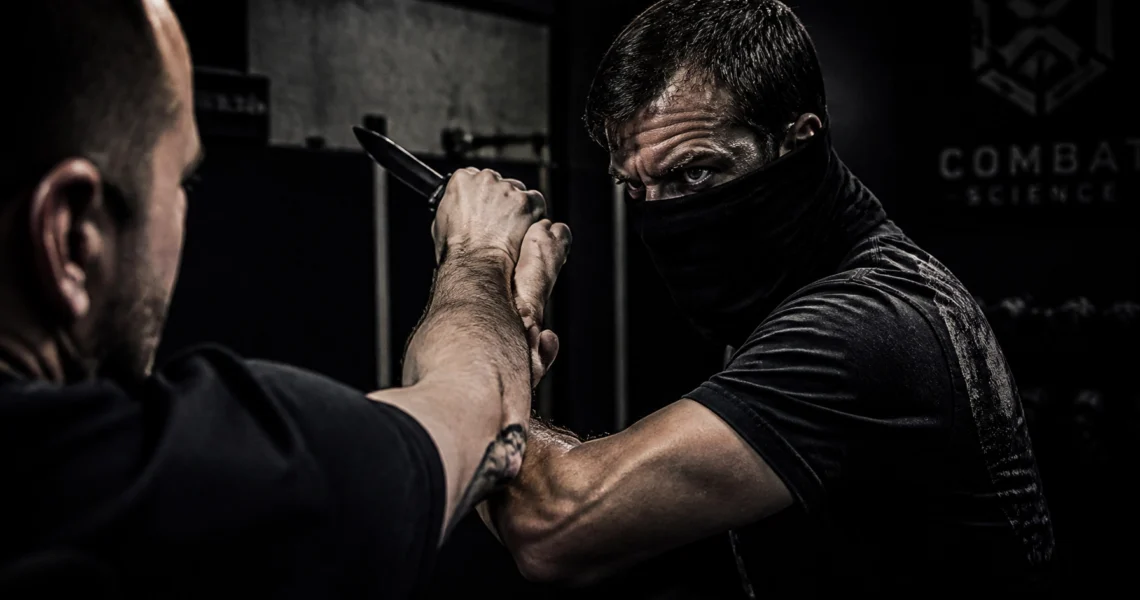
When it comes to tactical self defense miami, preparation is everything.
Knife Defense Techniques That Actually Work: 3 CQC Principles for Surviving an Edged Weapon Attack
Ever wonder how long your intricate tournament forms or choreographed wrist locks would keep you alive when a real blade flashes in a tight corridor? Let’s drop the polite martial arts theater right now. When theory meets cold pavement, most traditional systems crumble under the terrifying reality of high-speed violence. Understanding realistic knife defense techniques is not about performing a flashy disarm; it is about surviving a chaotic, lethal ambush where second-guessing means severe trauma or death.
When an attacker pulls a blade, they are not standing in a clean, brightly lit gym waiting for your counter-punch. They are stabbing at rates of three to four strikes per second, using their off-hand to pin you, shove you, or blind you. Effective knife defense techniques strip away Hollywood fantasies and replace them with gross-motor CQC (Close Quarters Combat) mechanics that function when your heart rate spikes to 180 BPM and fine motor skills vanish entirely.

Why Traditional Edged Weapon Defenses Fail on the Street
If you have spent any time in traditional martial arts schools, you have likely seen “defenses” where a compliant partner thrusts a rubber knife forward in a slow, linear motion and leaves their arm hanging in space. The defender steps off the line, wraps the wrist, twists the blade away, and delivers a clean finishing strike. This choreographed dance creates a dangerous illusion of safety.
In real-world violence, violent attackers do not lunge once and pause. They pump their arm like a sewing machine piston. They stab, retract, hide the blade, grab your head, and slash repeatedly. Attempts to grab a tiny target like a wrist while a razor-sharp blade is moving rapidly will result in sliced tendons and arteries. True survival relies on raw CQC principles grounded in human physiology, pressure testing, and ruthless prioritization.
Before diving into specific mechanics, it is critical to lay down a solid foundation in Close Quarters Combat fundamentals to understand how leverage, body position, and base play into dynamic combat scenarios.
The Harsh Reality: The Mechanics of a Real Knife Attack
To defend against an edged weapon, you must first comprehend how real knife attacks occur. Criminological studies and video analyses of real-world stabbings reveal consistent patterns:
- The Ambush Element: Over 80% of edged weapon assaults are surprise attacks where the victim does not even see the blade until they have already been struck multiple times.
- The Piston Motion: Attackers rarely execute wide, telegraphed slashes. They use short, violent, sewing-machine stabs aimed at the torso, neck, and lower abdomen.
- Control of the Victim: Attackers typically post their non-weapon hand against your collarbone, hoodie, or head to prevent you from escaping while they drive the blade home.
Knowing this, relying on soft, complex knife defense techniques is a recipe for disaster. You need a system that assumes you are already late, already under attack, and fighting for your life.
3 Core CQC Principles for Knife Defense Techniques That Work
When panic sets in, complex decision-making disappears. The following three principles form the backbone of functional, pressure-tested knife defense techniques designed for extreme stress environment survival.
Principle 1: Control the Weapon Limb, Not the Weapon (2-on-1 Concept)
Trying to manipulate a small knife blade with your fingers or isolate a opponent’s wrist is nearly impossible during high-stress encounters. Instead, real-world knife defense techniques prioritize controlling the entire weapon-bearing limb using your upper body mass.
The standard CQC answer to an active blade is the 2-on-1 overload technique (often referred to as a “2-on-1 frame” or “baseball bat grip”):
- Drive Forward: Instead of pulling back—which exposes your throat and vital organs—jam the attack by rushing into the inner pocket of the attacker’s arm.
- Clamp the Limb: Secure both of your hands onto the attacker’s weapon arm above the wrist (near the elbow or forearm), pinning their arm securely against your body or chest frame.
- Neutralize the Range: By gluing their weapon arm to your torso, you eliminate their ability to generate velocity, retract the blade, or pump rapid stabbing motions into your body.
By controlling the limb rather than hunting for the knife, you turn a complex dexterity battle into a gross-motor wrestling match where weight distribution and leverage dictate the outcome.
Principle 2: Accept the Reality of Injury and Manage Trauma
One of the biggest psychological hurdles in self-defense is the freezing response caused by the unexpected sensation of pain. In an edged weapon assault, you must accept a brutal truth: you are likely going to get cut or stabbed.
The goal of practical knife defense techniques is not to emerge completely untouched; it is to dictate where and how you sustain damage while ensuring the injuries are non-lethal. You are exchanging high-risk target areas (neck, heart, femoral artery, eyes) for low-risk target areas (forearms, back of shoulders, outer biceps).
Maintaining a strong tactical mindset under extreme stress allows you to fight through physical shock, keep driving forward, and secure weapon control even after sustaining initial cuts. Defensively framing with your outer arms shields your throat and chest frame while buying crucial seconds to execute counter-offensives.
Principle 3: Violence of Action and Immediate Escape
A knife fight is not a duel. You do not stay to “finish the fight” or apply complex submission holds once control is temporarily gained. The ultimate objective of all high-probability knife defense techniques is total disengagement and rapid escape.
Once you secure temporary control over the weapon arm, you must immediately apply overwhelming violence of action:
- Headbutts, Knees, and Stomps: Deliver brutal, hard-hitting strikes to the attacker’s throat, groin, or knees while keeping their weapon arm pinned firmly against your body.
- Create Environmental Obstacles: Dissect the space. Put cars, tables, doors, or terrain between you and the aggressor the second you break their grip.
- Sprint for Safety: Once an opening presents itself, turn and run immediately while shouting for help and checking your body for severe bleeding.
Every second spent standing near someone holding an edged weapon drastically decreases your odds of survival. Strike savagely to create space, then exit the zone immediately.
Integrating Knife Defense Techniques into Your Daily Combatives Routine
Reading about survival concepts will not build muscle memory. To make these knife defense techniques functional, you must train them under realistic conditions with progressive resistance:
- Use Marker Pens: Train with permanent markers or specialized chalk blades during sparring. This gives immediate visual feedback on where you were cut and highlights flaws in your defensive framing.
- Start from Disadvantaged Positions: Have a training partner initiate attacks from behind, while you are seated, or while pinned against a wall to mimic surprise street encounters.
- Incorporate Adrenaline Stressors: Perform heavy physical exertion (burpees, kettlebell swings) immediately before scenario drills to simulate high heart rates and fatigue.
Static martial arts drills give you false confidence. Scenario-based pressure testing exposes holes in your armor and refines your instincts so that your application of knife defense techniques becomes second nature when terror strikes.
Final Thoughts on Edged Weapon Survival
Surviving a real blade attack demands stripping away romanticized notions of self-defense. Fancy disarms, static knife grips, and compliant training partners belong in action movies, not in real-world combatives. By focusing on gross-motor limb control, accepting necessary trauma trade-offs, and responding with overwhelming violence of action to facilitate escape, you dramatically tilt the odds back in your favor.
Commit to dynamic, realistic training. Master the fundamentals of positioning and limb control, and remember that when blades are drawn, speed, aggression, and simple knife defense techniques will always triumph over complex martial theory.
Compare our training: Combatives vs MMA | CQC vs BJJ
FAQ
Q: What does tactical self defense miami entail?
A: It is real-world survival training and stress inoculation.
Q: How does this differ from sport MMA?
A: We focus on practical combatives rather than ring rules.
Q: Why choose this over BJJ?
A: Our focus is strictly on real world CQC and multi-threat scenarios.